Last updated November 25, 2026
 Sliding glass doors
 Single hung
 Double hung
 Horizontal roller
 Casement
 Bay & bow
 Entry doors
 Impact garage doors
 PGT
 CGI
Free in-home measure and quote - PGT, CGI and CWS impact lines compared on your actual openings, style by style
Get your free estimateSeasonal Windows & Doors Care for Elk Grove: Year-Round Homeowner’s Guide
Most window care advice homeowners find online was written for a climate that doesn’t exist here. National brands publish maintenance calendars built around hard freezes and snow loads, and none of it maps onto a valley that spends July at 105°F and January under tule fog. October is the month that matters most in Elk Grove, and almost nobody treats it that way. It’s the pivot point where five months of heat damage quietly turns into five months of air infiltration, and where a hairline caulk failure becomes a utility bill you can’t explain. This guide walks through all four seasons of window and door care as they actually play out in Elk Grove, with the inspection points, materials and timing that hold up in this specific valley climate.
Quick Answer
Windows and doors in Elk Grove need four seasonal checkpoints, not one annual inspection: an April-May heat prep (thermal expansion checks, screens, hardware), a September-October post-summer inspection before heating season, a November-January moisture diagnosis focused on where condensation forms, and a March spring reset for hardware and caulk at stucco interfaces. The October checkpoint is the highest-value one, because that’s when summer-driven seal stress and weather-strip compression either get caught or turn into winter draft problems.
Styles & brands we work with
- Single hung
- Double hung
- Horizontal roller
- Casement
- Bay & bow
- Sliding glass doors
- Entry doors
- Impact garage doors
- PGT
- CGI
Table of Contents
- Why Elk Grove’s Climate Demands Its Own Care Calendar
- Summer Prep: April and May
- Post-Summer Inspection: September and October
- Tule Fog and Winter Moisture: November through January
- Spring Reset: March
- Products and Tools That Actually Work Here
- When Care Isn’t Enough and Replacement Makes More Sense
- Common Mistakes to Avoid
Why Elk Grove’s Climate Demands Its Own Care Calendar
Elk Grove sits in the Sacramento Valley, and the valley has a specific way of testing building products. Summer heat pushes vinyl and aluminum frames through real thermal movement, and the assemblies inside an insulated glass unit go through their own daily pressure cycling. Then winter arrives with tule fog, which is cold, saturated air that sits low and pushes moisture against every gap, joint and seal on the exterior of a home. Neither condition is extreme on its own. Together, across one year in Elk Grove, they work a window harder than a milder coastal climate would.
The practical consequence is that care timing matters more than care frequency. A caulk joint checked in June tells you almost nothing, because summer expansion is still opening it. A door weather-strip tested in December is already compressed into its winter position, so you’ve lost the baseline. The useful checkpoints in Elk Grove land at the transitions: late spring before the heat, early fall before the moisture.
There’s a second local factor that generic guides miss: neighborhood housing stock varies enough that no single maintenance schedule fits every home. The newer construction on the west side of Elk Grove tends toward vinyl frames and large sliding door assemblies, while older pockets closer to the historic core still carry original aluminum sliders and wood entry doors. Those two product families age on completely different timelines. Vinyl responds to heat with expansion; aluminum responds with conduction. Care for one doesn’t transfer to the other.
What follows is a calendar organized around those transitions. It works whether you’re on your first year in a new build or maintaining a home you’ve owned for a while. Where a problem has already moved past what maintenance can solve, we say so plainly, because the right answer at that point is window replacement, not another tube of sealant.
Summer Prep: April and May
April and May are the last window in the year when you can work on your windows and doors without fighting the heat. The goal is to make sure everything on the exterior is in the position it needs to be before the frame starts moving.
Thermal expansion checks on vinyl frames
Vinyl frames expand and contract with temperature, and a frame installed correctly has room to move inside its opening. When it doesn’t, you see it in the summer. Walk the interior perimeter of each vinyl window in April and look for gaps at the corners where the frame meets the drywall return or trim. Look at the operable sash for scraping at the frame sides, and check whether the lock hardware still lines up cleanly without lifting or forcing. A sash that binds in April will bind harder in July, and that’s the earliest signal that the frame is being pinched rather than allowed to float.
Screen installation sequencing
Install screens before the first hot stretch, not during it. Once temperatures climb, vinyl screen frames and the tracks they sit in get tight, and you’ll fight an installation that would have taken ten minutes in April. Work through the home in this order:
- Clean every track and sill first, dry, before any screen goes back in.
- Inspect each screen for frame distortion by laying it flat on a hard surface; a frame that rocks is bent and will not seat properly.
- Install screens on the sun-exposed elevations last, so they spend the least time in direct afternoon heat while you’re handling them.
- Test every screen for free movement in its track and confirm the latches or pins engage fully.
Setting expectations for new units
If your windows or doors were installed recently, the first hot season can bring a noticeable smell from sealants, gaskets and coatings curing. This is normal in new units and it fades. What’s not normal is persistent odor combined with visible moisture inside the glass, and that distinction is worth remembering when summer arrives in Elk Grove.
Post-Summer Inspection: September and October
October is the most important window maintenance month in Elk Grove, and it’s the one most homeowners skip. Summer heat has just finished stressing every seal, gasket and caulk joint on the house. Heating season is about to begin. Whatever you find and fix in October saves you from living with it until spring.
Identifying IGU seal stress from heat cycles
An insulated glass unit is two panes sealed around a spacer with a desiccant-filled perimeter. Heat cycling works on that perimeter. In September and October, look at each window from the inside on a bright day and check the following:
- Fogging or hazing between the panes. This is the clearest sign the seal has failed. Surface condensation wipes away; between-pane condensation does not.
- A visible wavy or rainbow pattern in the glass at an angle. This can indicate spacer or sealant distortion.
- Water pooling in the bottom channel inside the unit. That’s a failed seal that has already taken on moisture.
- Interior sill staining below a window with no exterior leak path. Sometimes the water is coming from the unit itself.
A failed seal isn’t a safety issue, but it means the unit has lost its insulating gas and its performance is now closer to single glazing. It won’t fix itself and it won’t improve in winter.
Re-evaluating weather-strip compression on doors
Door weather-strip is a compression gasket. It works by being squeezed, and it eventually stops springing back. The right time to test it in Elk Grove is before heating season, while the door is still in its summer position and the gasket has had months of heat exposure. The test is simple: close the door on a piece of paper and pull. If the paper slides out with no resistance at any point around the perimeter, that section of weather-strip is done. Check the strike side, the hinge side, the top and the sweep at the bottom, and check it in three spots along each side, not just the middle.
Why this month earns its reputation
Doors that pass the paper test in October typically hold through winter. Doors that fail it in October draft all season, and the fix is a weather-strip replacement that costs a fraction of what a season of heated air loss costs. The same logic applies to caulk at window perimeters and at stucco interfaces. October is when you can still see and reach the joints before the fog settles in.
Tule Fog and Winter Moisture: November through January
Tule fog is the defining winter condition in the Sacramento Valley. It’s dense, cold, saturated air that forms close to the ground and lingers. For a home, that means exterior surfaces stay wet for long stretches and the pressure differential between indoor and outdoor air pushes moisture toward every imperfection in the building envelope. What you see on your glass in winter is a diagnostic, not a cosmetic issue.
Condensation placement diagnosis
Where condensation forms tells you what’s happening. Use this as your guide:
- Condensation on the room-side surface of the glass. This is an interior humidity issue, not a window failure. Elk Grove homes in winter often run humid from cooking, showers and laundry with the house closed up. Surface condensation clears when interior humidity drops, and the fix is ventilation, not the window.
- Condensation on the surface near the frame edge, or on the frame itself. This points to a thermal bridge at the frame and is more common on aluminum units. It’s a performance limitation, not a sudden failure.
- Condensation between the panes. The seal is gone. This will not clear on its own and it does not respond to any interior humidity change. Replacement of the unit is the only fix.
- Water on the interior sill with no between-pane fog and no interior humidity issue. Look at the exterior perimeter, the weep system and the caulk joint above the unit. Water is getting in from outside.
What to do during fog season
Don’t seal a home tight in winter to stop condensation; that makes it worse. Run bath and kitchen ventilation during and after use, and let interior humidity settle to a reasonable level. On the exterior, check that window weep holes are clear and that no caulk has been smeared over a drainage path. In December and January, fog in Elk Grove exposes drainage mistakes made during warmer months, and those are worth noting for spring repair.
Spring Reset: March
March is the reset month. Winter has finished working on the exterior, the fog has lifted, and you can see the real condition of every joint and mechanism. This is the season for the maintenance tasks that require dry conditions and moderate temperatures.
Hardware lubrication schedule
Once a year in March, before the heat, work through every operable window and door:
- Clean tracks, hinges and lock mechanisms with a dry brush or cloth. Grit is what wears hardware, not friction.
- Apply a dry lubricant to sliding tracks and rollers, not a wet oil. Wet lubricants attract dust in a valley climate.
- Lubricate hinges on casement and awning windows and on entry doors at the hinge pins.
- Operate every window and door through its full range of motion and confirm the lock engages without force.
Checking for winter caulk shrinkage at stucco interfaces
Exterior caulk shrinks and pulls away over winter, and stucco is where it shows first. In March, walk the exterior of every window and door and look at the joint where the frame meets the stucco. A hairline gap that opens in March is the one that grows all summer. The same applies to the caulk line on concrete or stucco stoops at door thresholds.
Screen reinstallation inspection
Screens that sat in storage or stayed in place all winter should be checked in March before they go back to work. Confirm every spline is intact, every frame is still square, and every mesh has no tear. Reinstall with the same sequencing rule as spring: clean tracks first, dry, then install.
Products and Tools That Actually Work Here
A lot of the maintenance advice written for milder climates assumes the tools will hold up. In Elk Grove, summer heat and winter fog are hard on products. Here’s what stands up to the local conditions, and what to avoid.
What holds up
- Exterior-grade polyurethane or hybrid sealant for stucco interfaces. Standard painter’s caulk shrinks too fast under summer expansion. A joint sealed with the right product in March is still intact the following March.
- Dry PTFE or silicone lubricant for tracks and rollers. Wet oils collect dust and gum up in a valley summer.
- EPDM or silicone weather-strip for doors. These spring back better than foam under months of compression.
- Impact-rated glazing where storm performance matters. Through PGT and CGI, impact-rated options are available for homeowners who want high-wind performance built into the unit rather than added later.
- Energy-efficient product lines from ECO Window Systems and ES Windows, which are built around reduced heat transfer for exactly the kind of summer heat Elk Grove gets.
What to skip
- Wet oils on sliding hardware.
- Foam weather-strip on doors that take direct sun.
- Silicone caulk over a joint that hasn’t fully dried; it seals moisture in rather than out.
- Adding a second layer of caulk over a failed joint instead of removing the old bead.
When maintenance has run its course
Some windows and doors in Elk Grove are past the point where tools and sealant will do much. If your units were installed long ago, if the between-pane fog is persistent across multiple windows, or if the frame material has warped beyond what hardware adjustment can compensate for, the honest answer is that the product needs replacing rather than maintaining. At that point, the conversation turns to product selection. With eight manufacturers in our portfolio, including CWS and ViewLux alongside the brands above, we match the unit to the home rather than steering every customer toward one brand. You can read more about how that process works on our window installation page.
When Care Isn’t Enough and Replacement Makes More Sense
Seasonal maintenance keeps good products performing. It doesn’t rescue products that have already failed. The judgment call is where that line sits, and in Elk Grove the line is fairly clear once you know what to look for.
Here’s how we think about it. If a window has surface condensation in winter that clears when the house is ventilated, that’s maintenance territory. If it has persistent fog between the panes, the unit has failed and no amount of exterior care will reverse it. If a door’s weather-strip fails the paper test every season even after replacement, the door itself is likely out of square or the frame has shifted, and that’s an installation-level problem rather than a maintenance one.
There’s also a case where replacement makes sense before anything fails outright: the unit is performing, but the product simply doesn’t fit the home’s needs. A single-glazed aluminum slider in a south-facing room in Elk Grove will run hot no matter how carefully you maintain it. Photographs before you replace don’t capture that cost, but utility bills do. When a homeowner reaches that point, door replacement and window replacement are usually best planned together, because the installation crew is already on site and the sequencing around stucco and trim works better as one project.
One practical note: we take on window and door replacement or installation jobs of three openings or more. Smaller jobs are worth calling about to confirm scope, but the estimate conversation is built around multi-opening projects. When you do get an estimate, ask for a written, line-item quote so you can compare products and installation separately.
Common Mistakes to Avoid
- Treating October like any other month. It’s the transition point in Elk Grove where summer damage converts into winter air infiltration. Skip it and you spend five months living with a small caulk failure you could have caught in an afternoon.
- Judging weather-strip by feel instead of by the paper test. A door can feel solid and still leak. The paper test takes ten seconds and gives you a real answer.
- Confusing between-pane fog with interior condensation. One means the seal has failed and only replacement fixes it. The other is a humidity issue you can address with ventilation.
- Installing screens in the middle of a hot stretch. Vinyl tracks get tight in the heat and installation gets harder. Do it in April, not July.
- Using wet lubricant on sliding tracks. It attracts dust through a Sacramento Valley summer and turns a smooth slide into a grinding one.
- Re-caulking over an old failed bead. The new bead sits on top of the failure and lets it continue underneath. Remove the old bead before applying new sealant, especially at stucco interfaces.
- Trying to seal a drafty, foggy unit with more caulk. If the seal inside the glass has failed, no exterior work restores performance. The unit needs replacing, not resealing.
See the difference
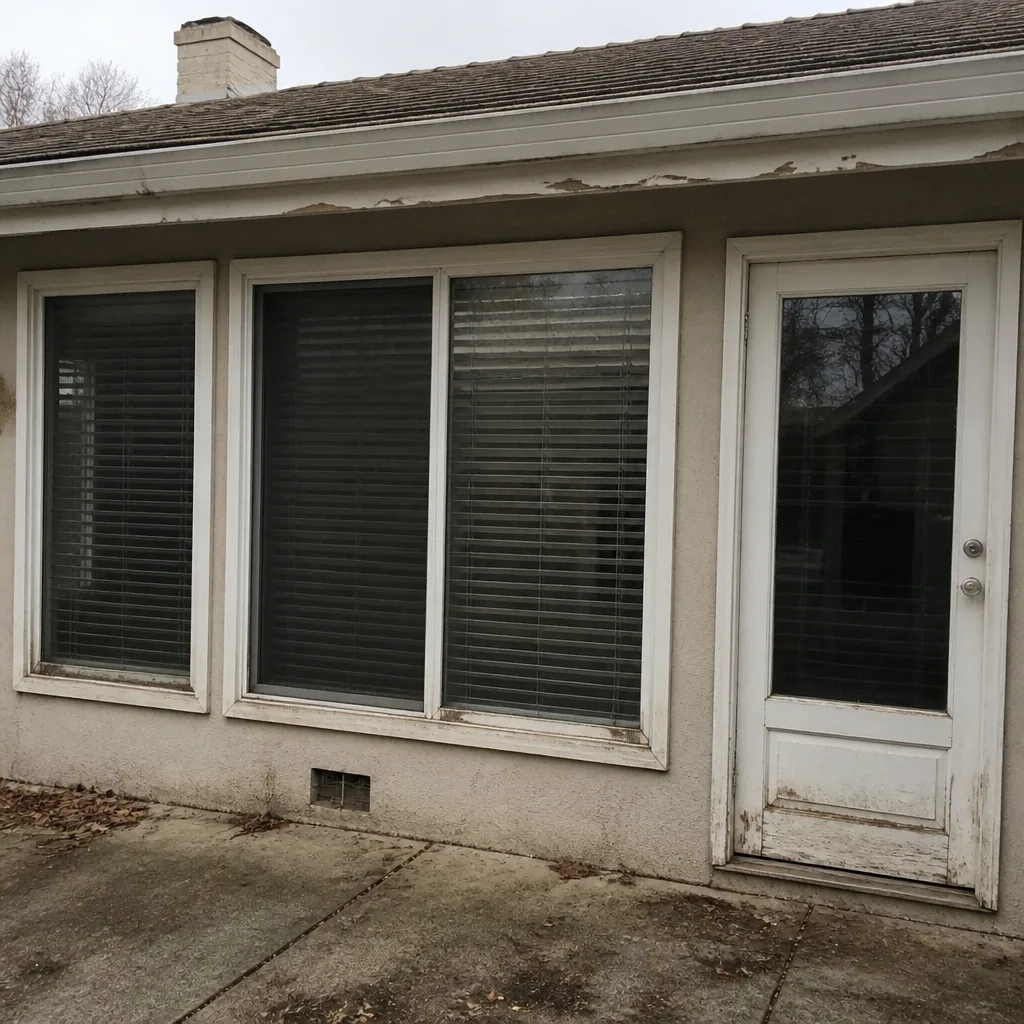 Before
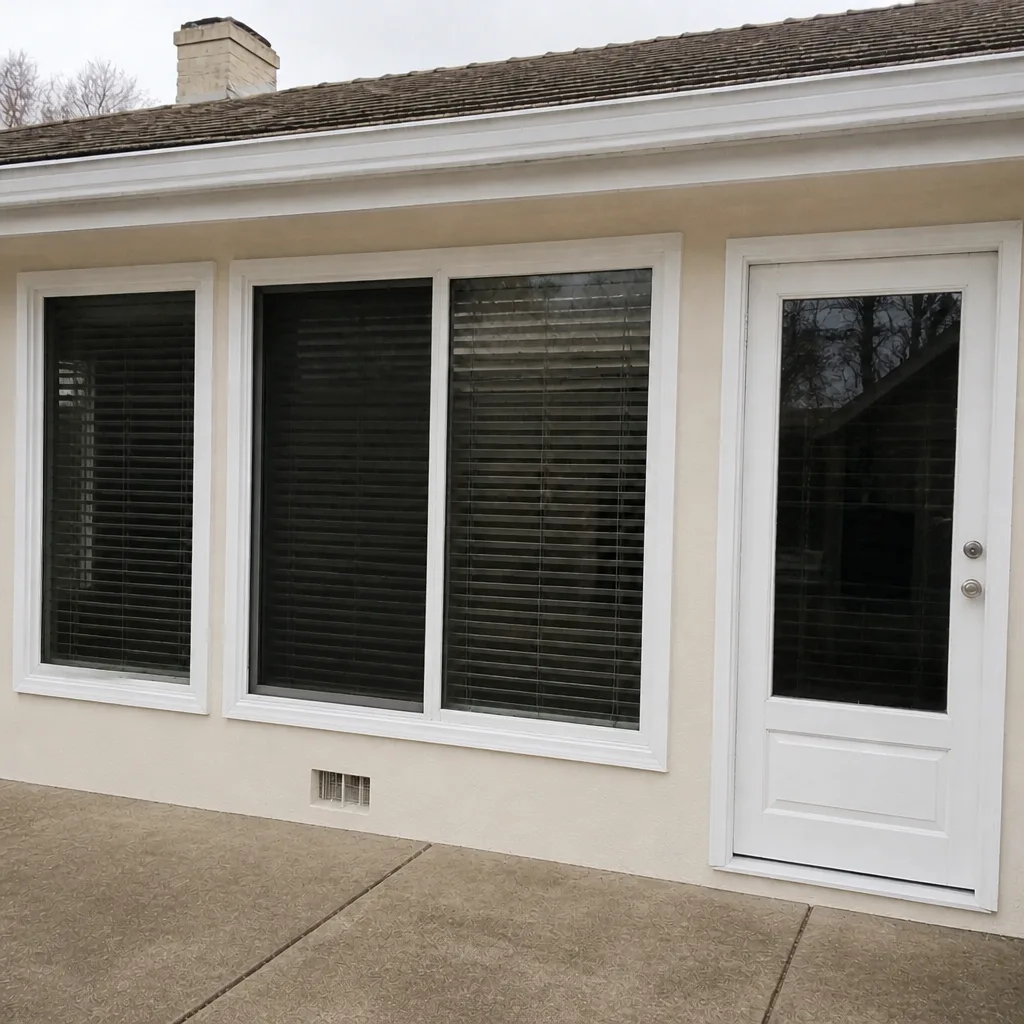 After
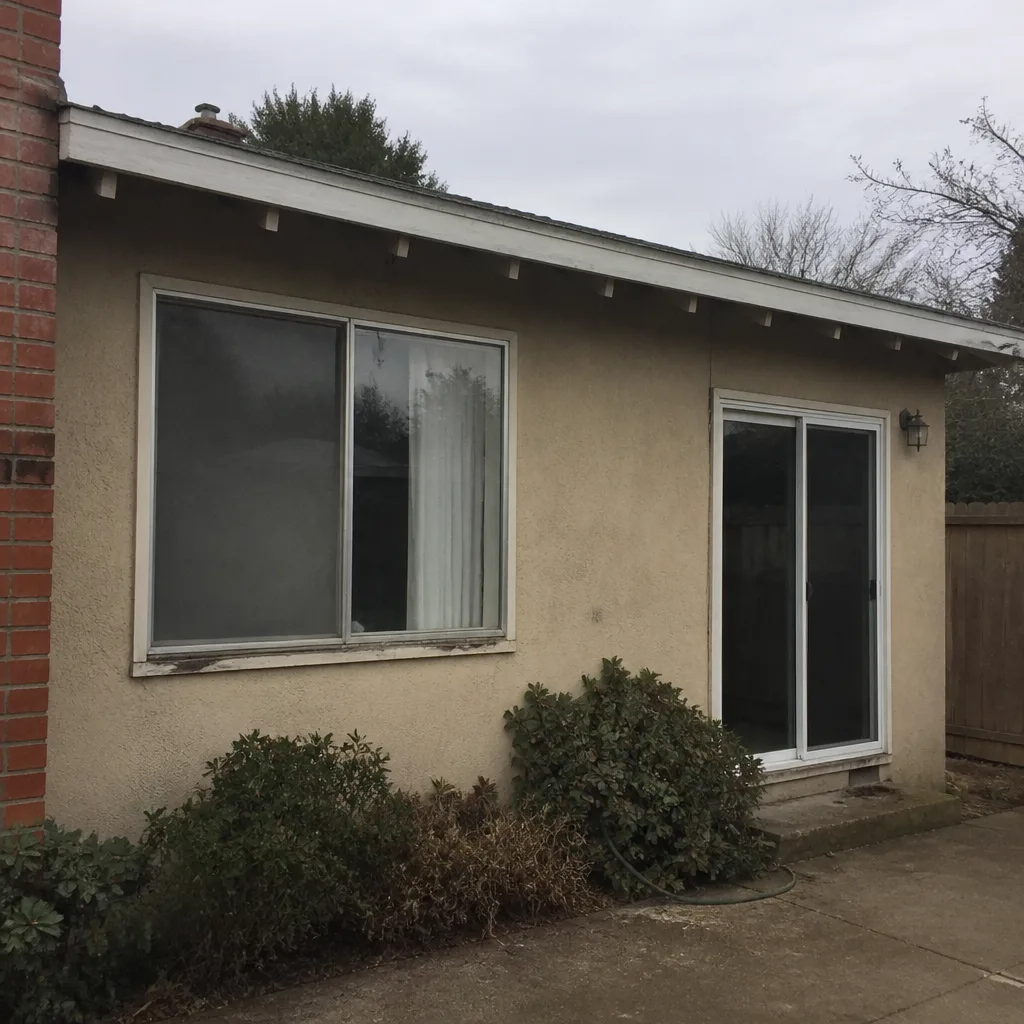 Before
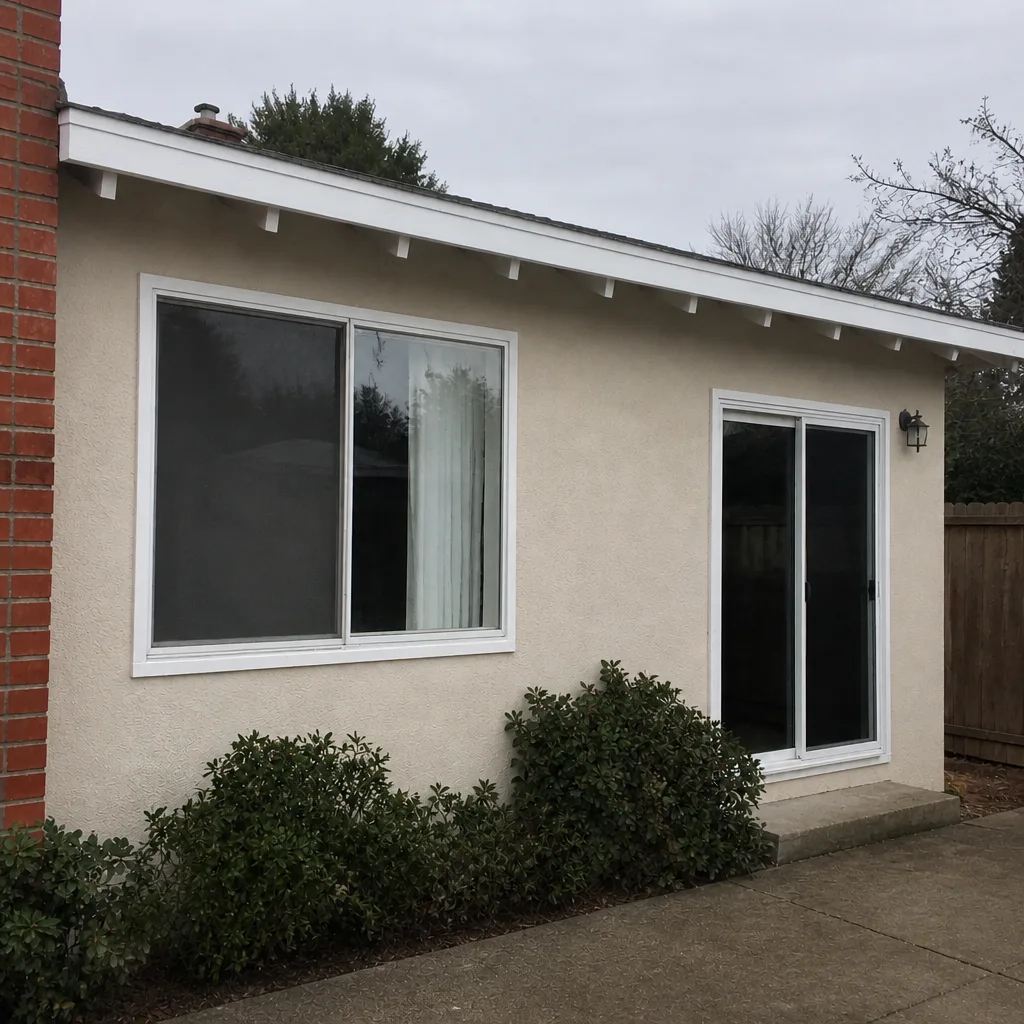 After
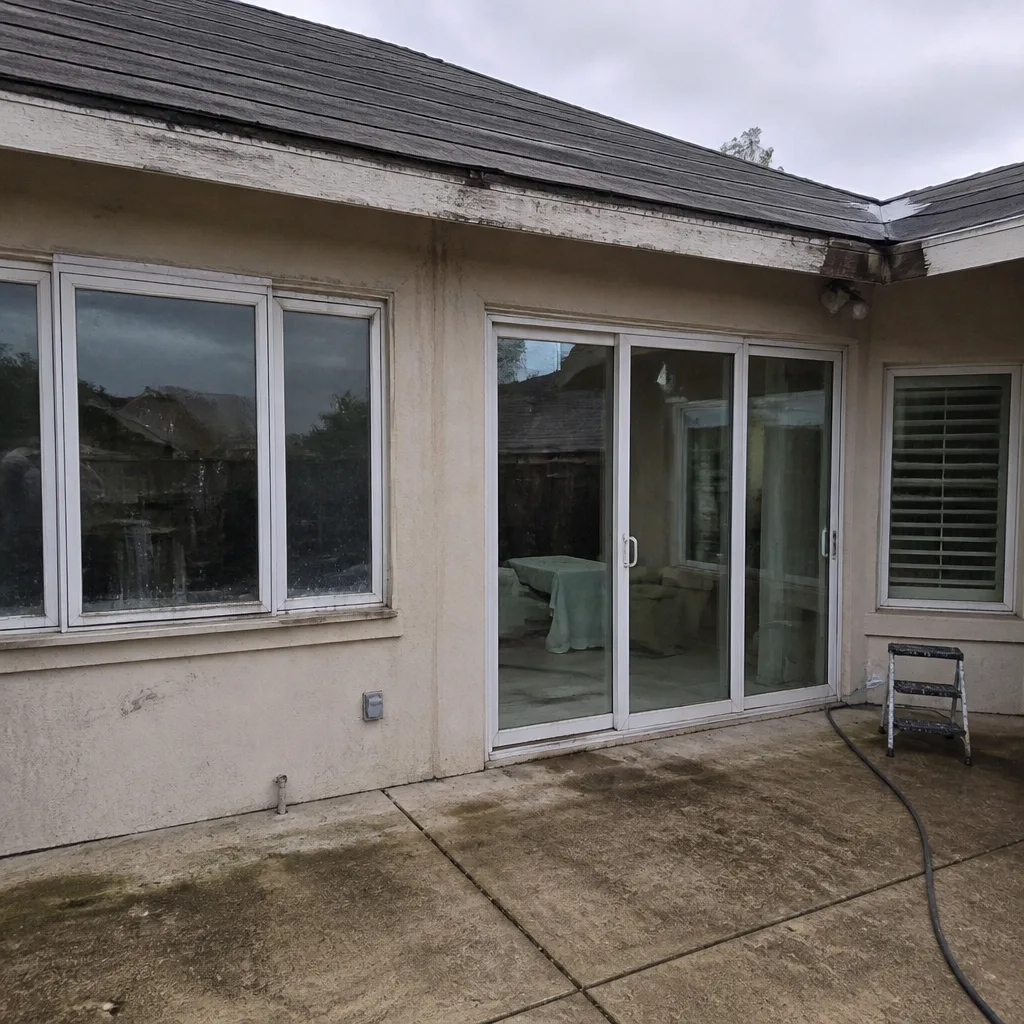 Before
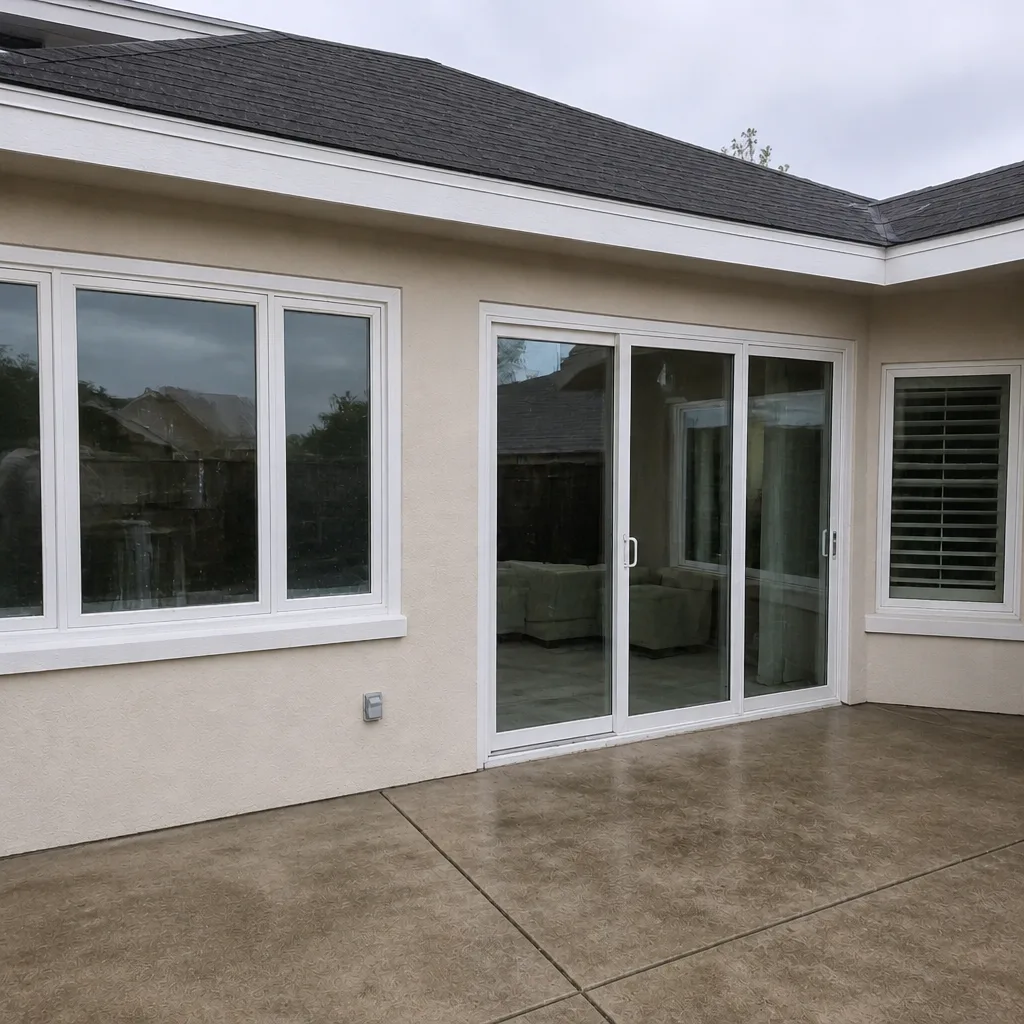 After
When to Call a Professional
Some seasonal care genuinely is a homeowner job: the paper test, screen installation, hardware lubrication, cleaning tracks. Those are straightforward and worth doing yourself. Where it makes sense to bring in a professional is when the diagnosis stops being obvious. Persistent between-pane fog across several windows, a door that fails the paper test every season even after new weather-strip, visible water intrusion at a threshold with no clear exterior source, a caulk joint that’s opened up at the stucco interface wider than a hairline, or a frame that’s pinched and no longer allows the sash to move freely: those are situations where a trained eye saves you from guessing wrong. Our technicians have up to 13 years of experience diagnosing exactly these conditions in the Sacramento Valley climate.
Elk Grove Window Replacement offers free estimates in Elk Grove – call (279) 333-8498 to schedule yours. There’s no charge to have someone look at a problem and tell you plainly whether it’s maintenance, weather-strip, or replacement. Estimates are written and line-item, so you can compare products and labor directly. The local pro we connect you with is licensed and insured as California requires.
Frequently Asked Questions
Twice a year at the transitions is the minimum worth scheduling: April-May for heat prep and September-October for the post-summer inspection before heating season. A full March hardware and caulk reset is worth adding annually, and moisture diagnostics during fog season in November-January are worth doing whenever condensation shows up in a new place. Call (279) 333-8498 if a diagnostic raises more questions than it answers.
Surface condensation on the room side of the glass is usually an interior humidity issue, not a window failure. Elk Grove homes get closed up in winter and humidity builds from cooking, showers and laundry. Run ventilation more often and surface fogging usually clears. If the condensation is between the panes, the unit’s seal has failed and the window needs replacement. Call (279) 333-8498 for a free evaluation if you’re uncertain which situation you’re looking at.
Surface condensation wipes away and responds to humidity changes; between-pane condensation cannot be wiped off and never clears on its own because the seal has failed. Surface condensation is a ventilation question. Between-pane fog is a glass unit question, and the fix is replacement of the unit rather than any kind of surface treatment. Call (279) 333-8498 for a free estimate if you have multiple windows with between-pane fog.
Use the paper test in September or October: close the door on a piece of paper and pull. No resistance anywhere around the perimeter means that section of weather-strip has lost its compression and needs replacing. Test three spots on each side plus the top and bottom. If most of the perimeter fails, call (279) 333-8498 for a free estimate before heating season begins.
New windows and doors can give off a noticeable smell during the first heat season as sealants and gaskets cure. This is normal and fades over the first few months. What isn’t normal is persistent odor combined with visible moisture between the panes; that combination is worth having checked. Call (279) 333-8498 for a free estimate if your new units show any sign of seal failure.
Yes, maintenance meaningfully extends the life of products that are still performing. What it can’t do is reverse a failed seal or fix a warped frame. If your windows show persistent between-pane fog or frames that no longer allow the sash to operate freely, seasonal care won’t change the outcome, and replacement becomes the honest answer. Call (279) 333-8498 for a free estimate and a clear recommendation.
The Bottom Line
The care calendar that actually works in Elk Grove is built around the transitions, not around a single annual inspection. October is the month that earns the most return: it’s when you catch seal stress, weather-strip compression and caulk gaps before heating season locks them in for five months. April and May get the exterior ready for heat, March resets hardware and stucco joints after winter, and fog season in November through January is where you diagnose moisture rather than guess at it. Use the paper test on doors, watch where condensation forms on glass, and be honest about when a window has moved past maintenance. When you need a trained diagnosis, call (279) 333-8498 to schedule a free estimate in Elk Grove.
Our scope is windows and doors. That’s it. That’s everything. Whether you’re confirming that your seasonal care is on track or you’ve decided it’s time to look at Elk Grove Window Replacement, we’ll give you a straight answer and a written, line-item estimate, including impact-rated options from PGT and CGI and entry doors from Therma-Tru as part of the conversation.
Written by the team at Elk Grove Window Replacement.