Last updated November 25, 2026
 Sliding glass doors
 Single hung
 Double hung
 Horizontal roller
 Casement
 Bay & bow
 Entry doors
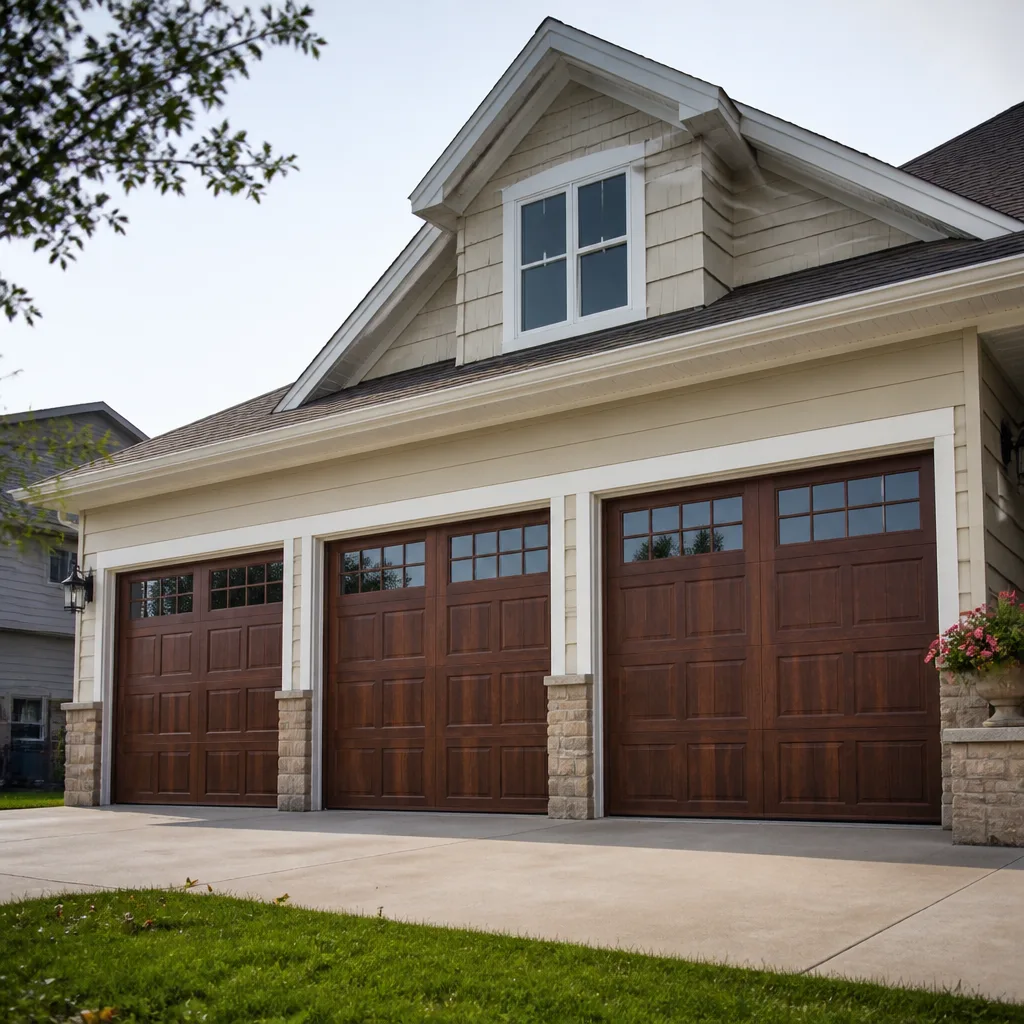 Impact garage doors
 PGT
 CGI
Free in-home measure and quote - PGT, CGI and CWS impact lines compared on your actual openings, style by style
Get your free estimateWindows & Doors Emergency Preparedness Guide for Elk Grove Homes
Most emergency prep advice for Elk Grove homeowners stops at the go-bag and the fire extinguisher. It rarely reaches the thing that separates your family from the outside air: the glass, frames, seals and weather-stripping on every opening in your house. During the 2020 wildfire smoke events, homes in the Sacramento Valley with compromised window seals had interior air quality readings roughly four times worse than homes with intact insulated glass unit (IGU) seals and proper weather-stripping. Your windows are your first line of air filtration. This guide connects emergency readiness to real product decisions, so you can prepare in advance instead of reacting mid-event.
Quick Answer
Window and door emergency preparedness in Elk Grove comes down to four things: intact seals and weather-stripping to block smoke and ember intrusion, laminated or impact-rated glass on wind-exposed sides of the house, compliant egress openings in every bedroom, and a post-event inspection routine that catches damage you can’t see at a glance. The right product choices, made before an event, do more for your home’s safety than any last-minute measure. Call (279) 333-8498 for a free estimate if you’re ready to close those gaps.
Styles & brands we work with
- Single hung
- Double hung
- Horizontal roller
- Casement
- Bay & bow
- Sliding glass doors
- Entry doors
- Impact garage doors
- PGT
- CGI
Table of Contents
- Wildfire Ember Intrusion: Where Doors and Windows Leak Risk
- Air Quality Events: What “Sealed” Actually Means
- Valley Wind Events and Glass Breakage Risk
- Emergency Exit Compliance: Egress Windows as a Safety Baseline
- Post-Event Damage Assessment: What to Inspect
- Product Decisions That Build In Resilience
- Common Mistakes to Avoid
- When to Call a Professional
Wildfire Ember Intrusion: Where Doors and Windows Leak Risk
Embers don’t need an open flame to enter a home. They ride wind currents, collect against surfaces, and find the smallest gaps: failed weather-stripping under a door, a dried-out sweep at a threshold, a corner seal that’s pulled away from the frame. Standard emergency guides talk about attic vents and gutters, but the door and window plane is where most homeowners are genuinely underprepared.
In Elk Grove, the wildfire risk profile is less about nearby flames and more about smoke and airborne embers carried into the valley during large regional fires. That distinction matters, because it shifts the retrofit focus toward sealing and filtration rather than defending a property line.
Here’s where most intrusion actually happens:
- Threshold gaps under exterior doors. Look at any door sweep that’s more than a few years old. If you can see daylight under the door from inside, embers and smoke have the same path.
- Weather-stripping that’s lost its compression. Foam and bulb seals harden over time and stop pressing against the frame. The door still closes, but it no longer seals.
- Window frame gaps. Failed perimeter caulking, especially on older single-pane windows, leaves a channel for smoke to drift into the wall cavity and eventually indoors.
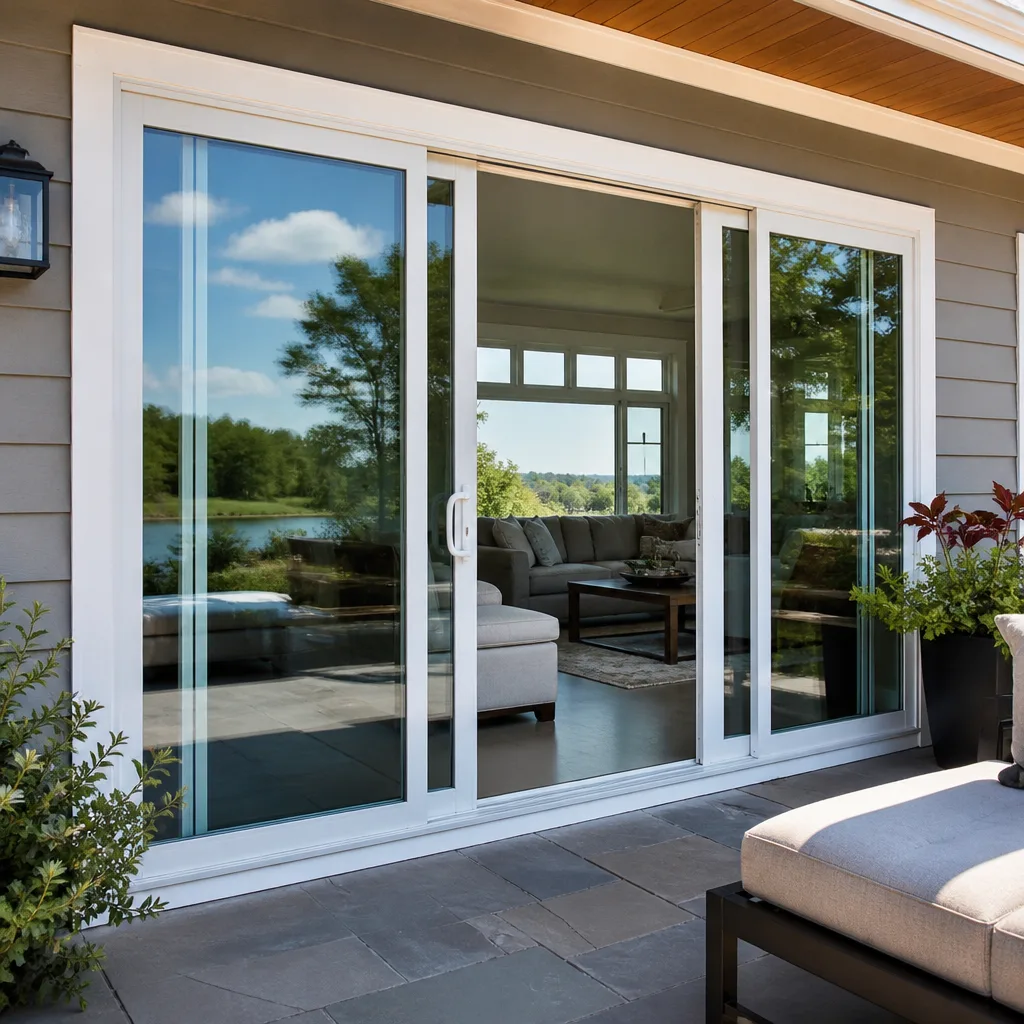
- Sliding glass door tracks. Sliders rely on a tight interlock between the panels and the jamb. A worn roller or a dropped track opens that gap by a measurable margin.
- Dryer vents and utility penetrations near doors. Not a window issue on their own, but they combine with door gaps to move more air than any one opening alone.
The good news: most ember-intrusion gaps can be closed without a full replacement. Better weather-stripping, an automatic door bottom, and re-caulking around frames can meaningfully reduce infiltration. If you’re already considering new openings, door replacement with a properly sealed threshold and rigid frame is the more permanent fix. When you’re ready, we can walk the openings with you and quote the work.
Air Quality Events: What “Sealed” Actually Means
“Sealed” is not a binary. A window can look closed and still leak significant air. In our experience across Elk Grove and the surrounding Sacramento Valley, homeowners often believe their windows are tight until they hold a hand near the frame on a windy day and feel a draft. During a smoke event, that same pathway is moving particles indoors.
Air infiltration through windows and doors happens in four basic ways:
- Around the operable sash. The gap between the sash and the frame, controlled by the weather-stripping. This is the most common infiltration route.
- At the fixed perimeter. Where the window meets the wall, the seal between frame and rough opening matters. Failed caulk or a shrunken gasket lets air slip around the whole unit.
- Through the interlock on sliders. Sliding doors and windows depend on the panels overlapping tightly. Any distortion, debris in the track, or worn rollers opens the interlock.
- Through failed IGU seals. When the seal between the panes breaks, you get fogging between the glass. That’s a visible sign the unit’s thermal and air performance has degraded.
Newer units built with energy performance in mind, like those from ECO Window Systems and ES Windows, are engineered with tighter tolerances and better gasket systems than the units most Elk Grove homes were built with. They reduce the air exchange that lets smoke indoors, and they help with utility costs the rest of the year. If a smoke event has you evaluating your current windows, use it as a reason to look at window replacement rather than another round of caulk.
One practical note: check your filter strategy too. If your HVAC filter is pulling smoke indoors through a return duct, sealed windows won’t help much. The window and door upgrades plus a proper filter plan is what actually protects interior air.
Valley Wind Events and Glass Breakage Risk
Standard dual-pane windows handle wind pressure, but they aren’t designed to resist impact. When the occasional severe valley wind event sends debris through the air, the difference between a standard dual-pane and a laminated glass unit is the difference between a hole and a crack.
Here’s the technical difference. A standard dual-pane unit uses two panes of annealed glass separated by a sealed spacer. On impact, the glass breaks into large shards, and the unit loses integrity entirely. A laminated unit bonds glass to a plastic interlayer. On impact, the glass may crack, but the interlayer holds it in place, keeping the opening functional and keeping wind and debris on the outside.
Which Elk Grove homes actually need the upgrade? In our experience, the exposures that warrant laminated or impact-rated glass are:
- Windows and doors on the windward side of the property during typical seasonal wind directions.
- Second-story and taller openings, which see higher wind speeds and take more debris energy.
- Any large glazed opening over roughly 20 square feet, where a breach also means structural pressure loss.
- Sliding doors, because a wide opening under load behaves differently from a narrow window.
- Homes near open lots or fields, where wind accelerates before it reaches the structure.
Impact-rated options are available through PGT and CGI, two brands built for high-wind performance. They also support storm hardening in ways insurers often recognize, so it’s worth asking your carrier before you commit. If you’re on the fence about glass upgrades, our team can review the exposure side of your home and make a specific recommendation, not a blanket one. Call (279) 333-8498 to start that conversation.
Emergency Exit Compliance: Egress Windows as a Safety Baseline
Every bedroom needs a code-compliant emergency exit. That’s a life safety requirement, not a permit box to check. If you bought a home in Elk Grove with older windows, or you’ve added a bedroom in a finished basement or garage conversion, it’s worth confirming that the egress opening still meets current code.
The core standard for egress is straightforward. An operable window must provide a clear opening with a minimum net area, minimum clear width and height, and a maximum sill height above the floor so an occupant can get out without a ladder. Local code enforcement applies the latest adopted version of the residential building code, so the exact numbers can shift. The safest move is to confirm with your city’s building department before any egress-related project, rather than guessing.
Where egress goes wrong in practice:
- Furniture in front of the opening. A code-compliant window blocked by a dresser is not egress. Clear the opening.
- Security bars without quick release. Bars prevent entry but also restrict exit. If you have them, make sure the release mechanism is visible and functional.
- Failed hardware. A stuck sash or a slider that won’t roll won’t serve as an exit in an emergency.
- Replacement windows that shrink the opening. A new unit installed inside the old frame can reduce clear opening area below the code minimum. This is one reason the type of window installation matters as much as the window itself.
If you’re not sure your sleeping rooms meet code, treat it as a safety issue to resolve, not a someday list item. Replacing an older bedroom window with a properly sized unit is the same project that improves air sealing, so you get the safety upgrade and the infiltration improvement at once.
Post-Event Damage Assessment: What to Inspect
Some of the most consequential damage after a wind or smoke event is invisible at a glance. A window that looks fine can have a partially failed seal that fogs up weeks later, or a shifted frame that starts leaking at the first rain. A quick walkthrough in the days after an event catches a lot of it.
Follow these steps:
- Walk every opening from the interior. Look for fogging between the panes, water stains on the sill, or a shadow at the frame that wasn’t there before.
- Look for impact marks. Even small chips or cracks near the edges of the glass are places where stress concentrates. Photograph them.
- Check operability. Open and close every window and door. If something binds, drags, or fails to latch cleanly, the frame or hardware has likely shifted.
- Inspect weather-stripping and sweeps. Run a hand along the perimeter of every exterior door. If you feel air, the seal is compromised.
- Look at the caulk line from outside. Any visible cracks, gaps, or pull-away at the frame-to-wall joint needs attention.
- Check the interior of the home for smoke smell. Persistent smoke odor near a specific opening often points to infiltration at that window or door.
- Note anything that changed. A door that used to latch and now doesn’t is a signal. Write it down with a photo and a date.
Here’s a specific note for smoke events: oils and ash settle on glass and gaskets. Wipe down the frames and gaskets with a damp cloth after an extended smoke period, especially around operable windows and sliding doors. That small step reduces the abrasion that wears out weather-stripping over time.
Product Decisions That Build In Resilience
Emergency preparedness is easier to think about as a product problem than a what-if problem. Every opening you replace is a chance to build in the sealing, glass and durability you’d want during an event. This is where we spend most of our time with homeowners, because the right window for your home is not the only brand we carry, it’s the one that fits your exposure, your budget and your code requirements.
We supply and install products from eight manufacturer brands: PGT, CGI, CWS, ES Windows, ECO Window Systems, Mr-Glass, Therma-Tru and ViewLux. That breadth matters for preparedness work because it lets us match the upgrade to the risk instead of defaulting to one product line for every house. Impact-rated glass from PGT and CGI for wind exposure. Energy-efficient units from ECO Window Systems and ES Windows for air infiltration and utility performance. Entry doors from Therma-Tru for a tight, well-sealed primary opening, with weather-stripping designed to stay in contact over time. Sliding door replacement when the interlock on an aging slider can’t be trusted.
A few things that improve resilience regardless of brand:
- Laminated glass on high-exposure sides. The single biggest difference in how glass performs under impact.
- Multi-point locking hardware on entry doors. More contact points mean a tighter seal and a more secure opening.
- Automatic door bottoms. They drop when the door closes, creating a real seal at the threshold instead of leaving a gap.
- Proper shimming and flashing during installation. A perfect window set in a sloppy opening still leaks. This is where craftsmanship matters as much as the unit.
- Egress-compliant sizing for every bedroom. Confirms life safety and air sealing in the same project.
We specialize in windows and doors. That’s it. That’s everything. That focus means our technicians, who have up to 13 years of experience, work exclusively in this trade and see how these products perform in Elk Grove homes over time. If you’re planning a project and want product guidance instead of a sales pitch, Elk Grove Window Replacement is a good place to start, or call (279) 333-8498 and we’ll schedule a free estimate. Note that our work begins at three openings or more, so a project to harden the high-exposure side of a home fits naturally.
Common Mistakes to Avoid
- Counting on caulk to solve infiltration. Re-caulking helps, but if the weather-stripping, sweeps or gaskets are worn, the air still finds a path. Fix the seal at the source.
- Skipping the interior inspection after a wind event. Exterior glass can look fine while the IGU seal is failing. Check from inside for fogging between the panes in the weeks after a storm.
- Assuming a dual-pane is impact-resistant. Standard dual-pane units aren’t laminated glass. If your exposure is real, confirm the spec.
- Blocking the bedroom egress window. Furniture, a bed frame, or a bookshelf in front of the opening cancels the safety feature. Keep the opening clear.
- Ignoring failed sliding door rollers. A slider that needs a lift to close isn’t sealing. That’s an air infiltration problem now, and a security problem too.
- Choosing the smallest replacement unit that fits. A smaller unit in an old rough opening can knock the egress compliance offline. Size matters.
- Treating smoke events as air quality only. Smoke also settles on glass and gaskets, accelerating wear on weather-stripping. Wipe the gaskets down after extended events.
When to Call a Professional
Call a professional when the glass is cracked, when you can see fogging between panes, when a door no longer seals at the threshold, or when the frame has visibly shifted after an event. Call too if your sleeping rooms don’t confirm as egress compliant, or if the high-exposure side of your home is glazed in standard dual-pane and you’re planning to stay through future wind and smoke seasons. These are product decisions, not maintenance chores, and they benefit from a trained eye on site.
Elk Grove Window Replacement offers free estimates in Elk Grove, with a written line-item quote and no change orders on the scope we sign. The local pro who performs the work is licensed and insured as the state requires. Call (279) 333-8498 to schedule your free estimate, and we’ll walk the openings with you and show you where your home’s actual vulnerabilities are.
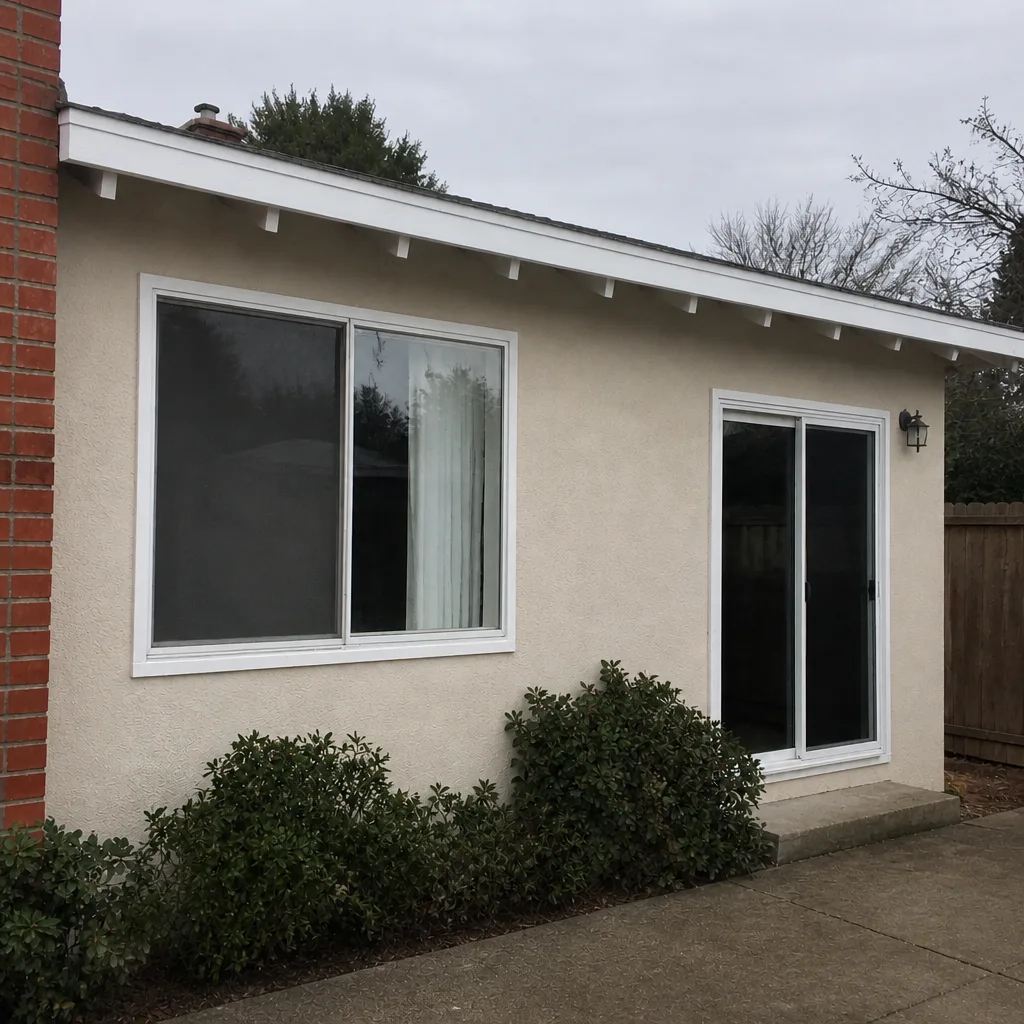
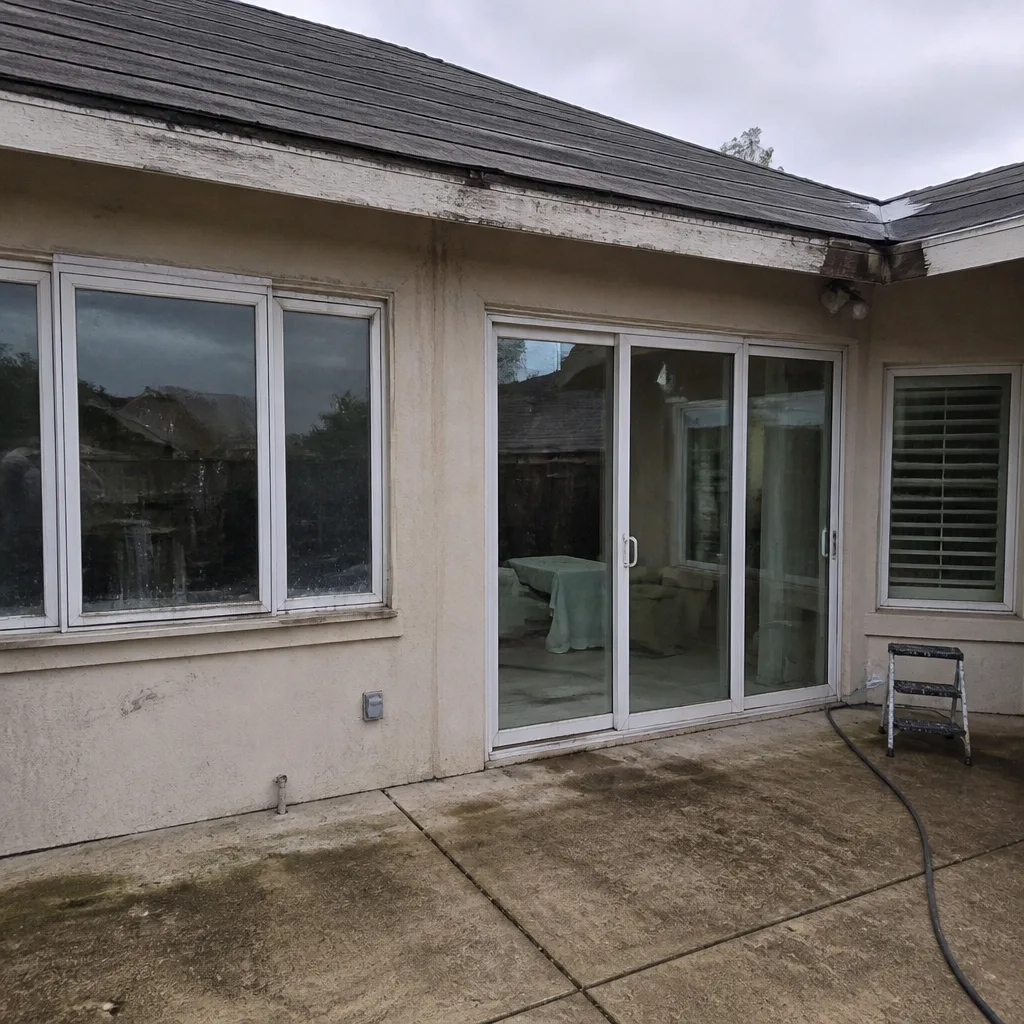
See the difference
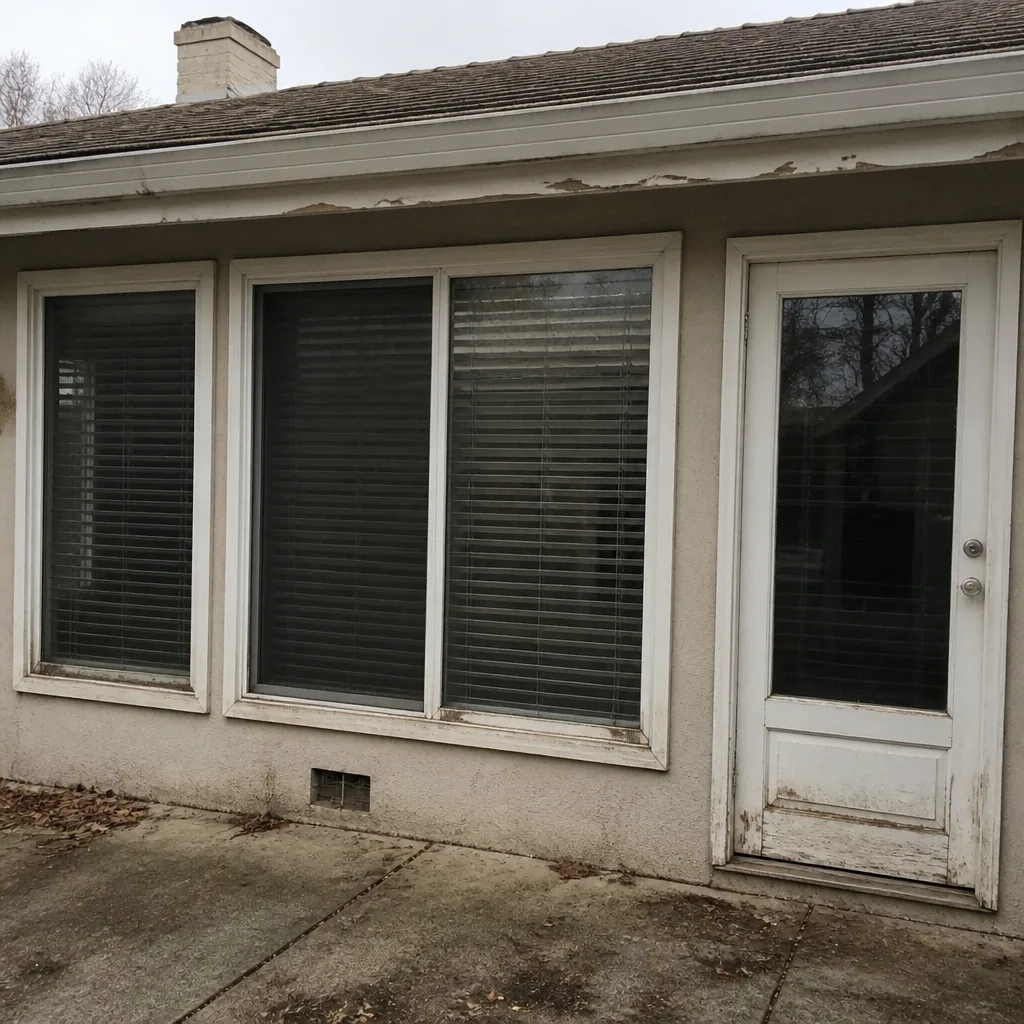 Before
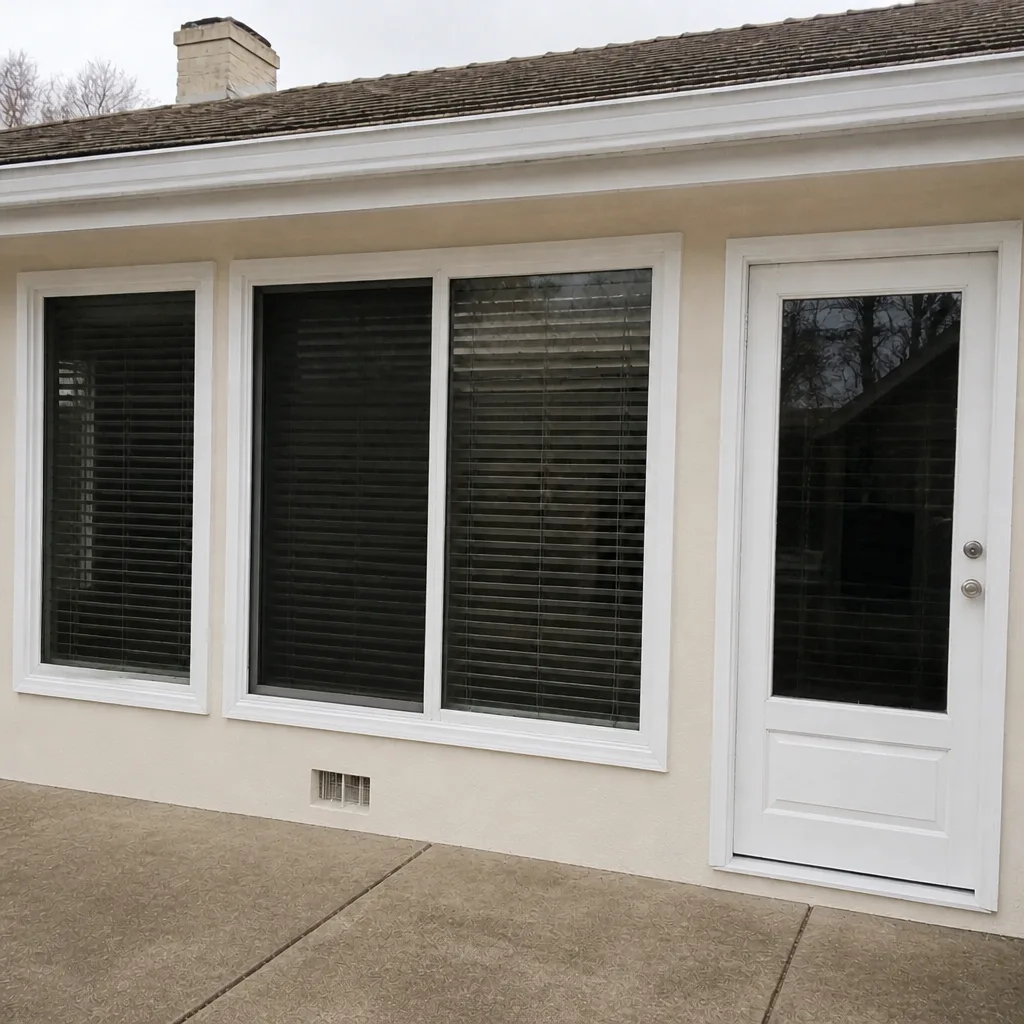 After
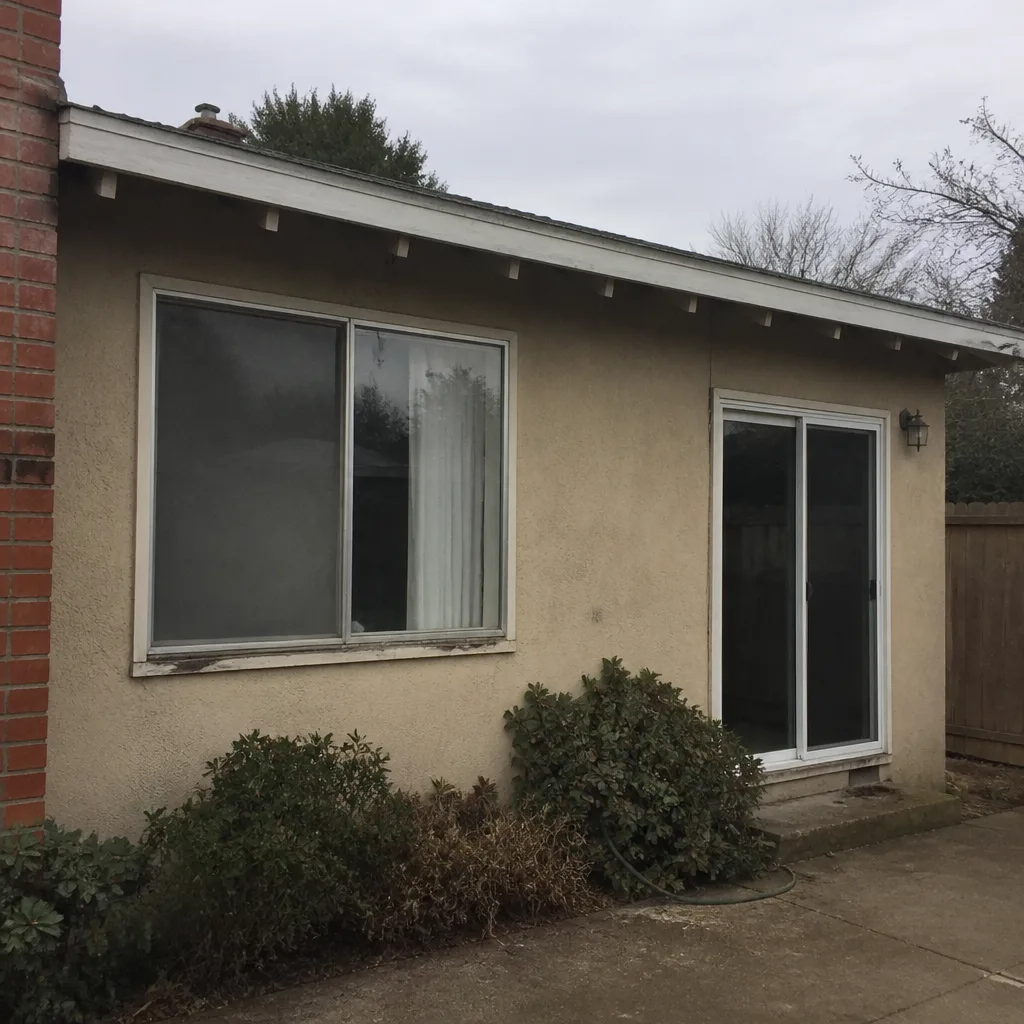 Before
 After
 Before
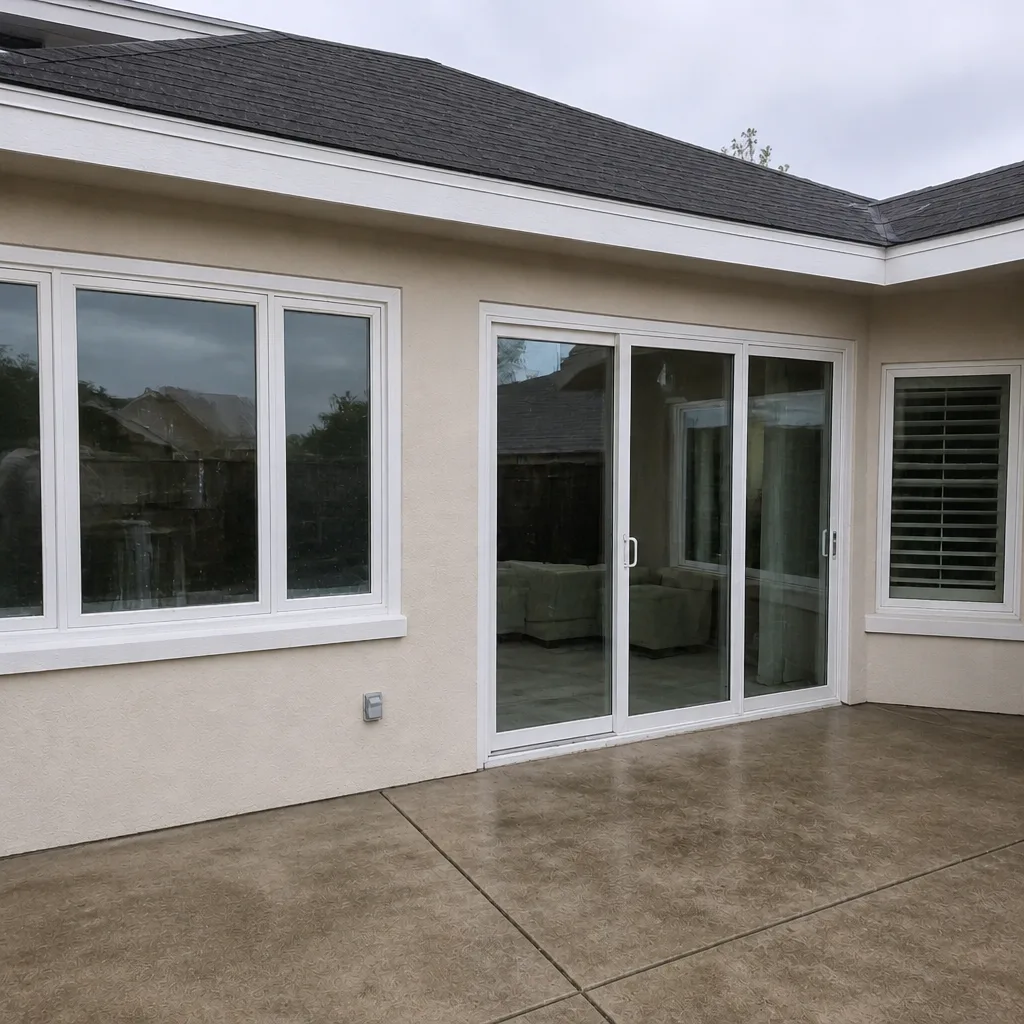 After
Frequently Asked Questions
Seal every opening you can: confirm weather-stripping and door sweeps are tight, close and latch all operable windows and sliding doors, and set your HVAC system to recirculate with a fresh filter. Long-term, replacing worn seals and air-leaky windows is what actually protects interior air quality. Call (279) 333-8498 for an exact quote on replacement or sealing work; estimates are free.
No. Standard dual-pane windows are not impact-resistant. They’ll handle wind pressure, but on impact the glass breaks and the unit loses integrity. Laminated glass from an impact-rated line is what holds together under impact. If your exposure is elevated, ask about impact-rated options when you get your estimate.
Plan on inspecting weather-stripping twice a year, and immediately after any wind or smoke event that affects your area. Run a hand along the perimeter of each exterior door; if you feel air, the seal is compromised. Replacing weather-stripping is inexpensive, and it’s the first line of defense against ember and smoke intrusion.
It can, if the unit is sized correctly. A replacement window that’s smaller than the original opening can reduce clear opening area below code. The safe approach is to confirm the applicable code with your city’s building department and size the unit to meet it. This is one reason the type of window installation matters as much as the window itself. Call (279) 333-8498 for a free estimate and we’ll review your egress openings with you.
Check three things: that it rolls smoothly without lifting, that the interlock between the panels sits tight, and that the door seals at the jamb when closed. A slider that drags or needs a lift to close is no longer sealing, which means air and smoke can get in. Sliding door replacement is often the better answer once rollers and tracks have worn past a point. Free estimates in Elk Grove – call (279) 333-8498.
They’re worth it if your home has real wind exposure: a windward side, large glazed openings, or taller elevations. If your openings are largely protected, standard high-performance units with tight seals may be the better fit. The right answer depends on the home, and we’d rather recommend the specific upgrade that fits your exposure than upsell you. Call (279) 333-8498 to schedule a free estimate.
The Bottom Line
Emergency preparedness in Elk Grove starts with the openings in your wall, not the supply kit in the closet. Intact seals and weather-stripping keep smoke and embers out. Laminated or impact-rated glass on exposed sides holds under wind debris. Egress-compliant bedroom windows are a baseline, not an option. And a post-event walkthrough every time catches damage before it becomes a bigger problem. Fixing these things before the next wind or smoke season is the work that actually moves the needle. If you want help evaluating your home’s openings, call (279) 333-8498 for a free estimate. Our team knows windows and doors, and that focus shows up every day on Elk Grove jobs.
Related Reading
If you’re planning around what you’ve read here, these are the pages that pick up the next step: door replacement for threshold and entry sealing, window replacement for aging units that have lost their air performance, and window installation for new openings and egress corrections. Whichever project fits, we’re glad to walk your openings with you and price the work line by line.
Written by the team at Elk Grove Window Replacement.