
Last updated November 25, 2026
 Sliding glass doors
 Single hung
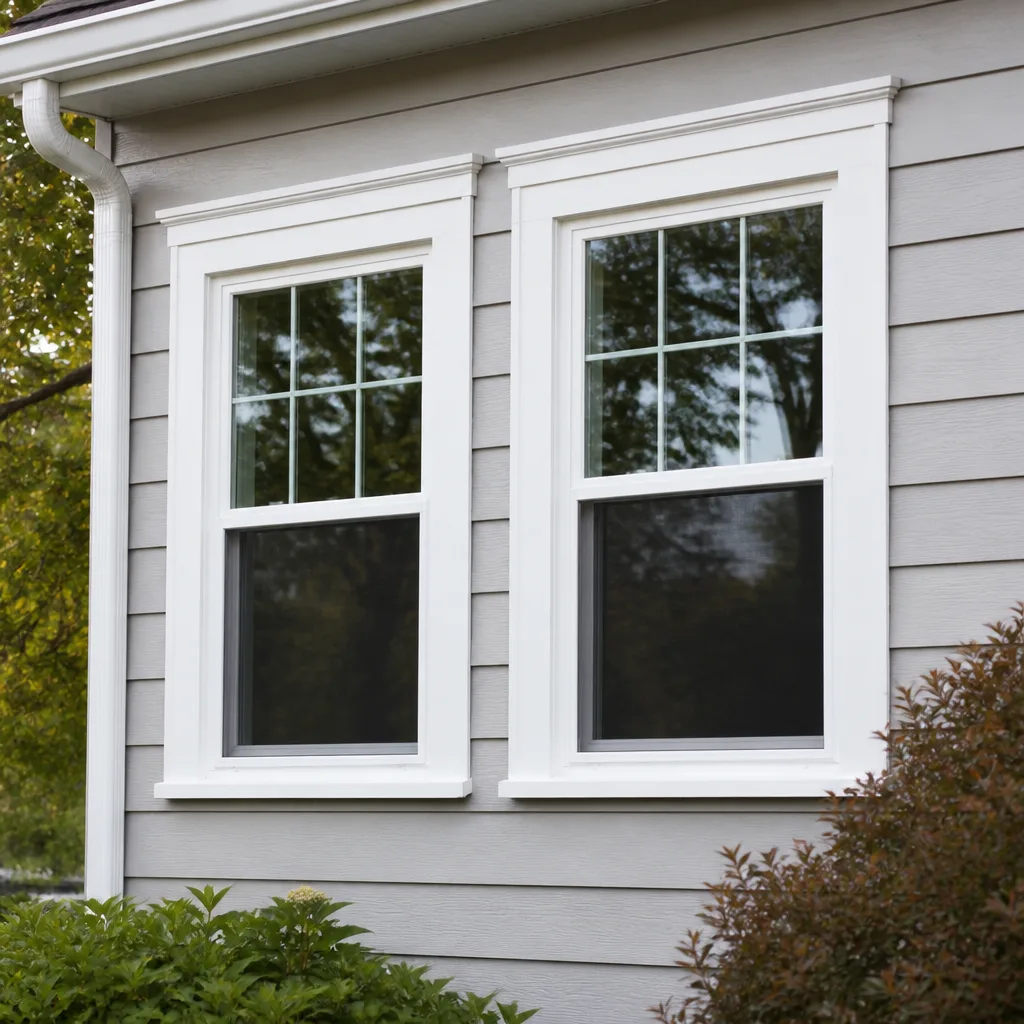 Double hung
 Horizontal roller
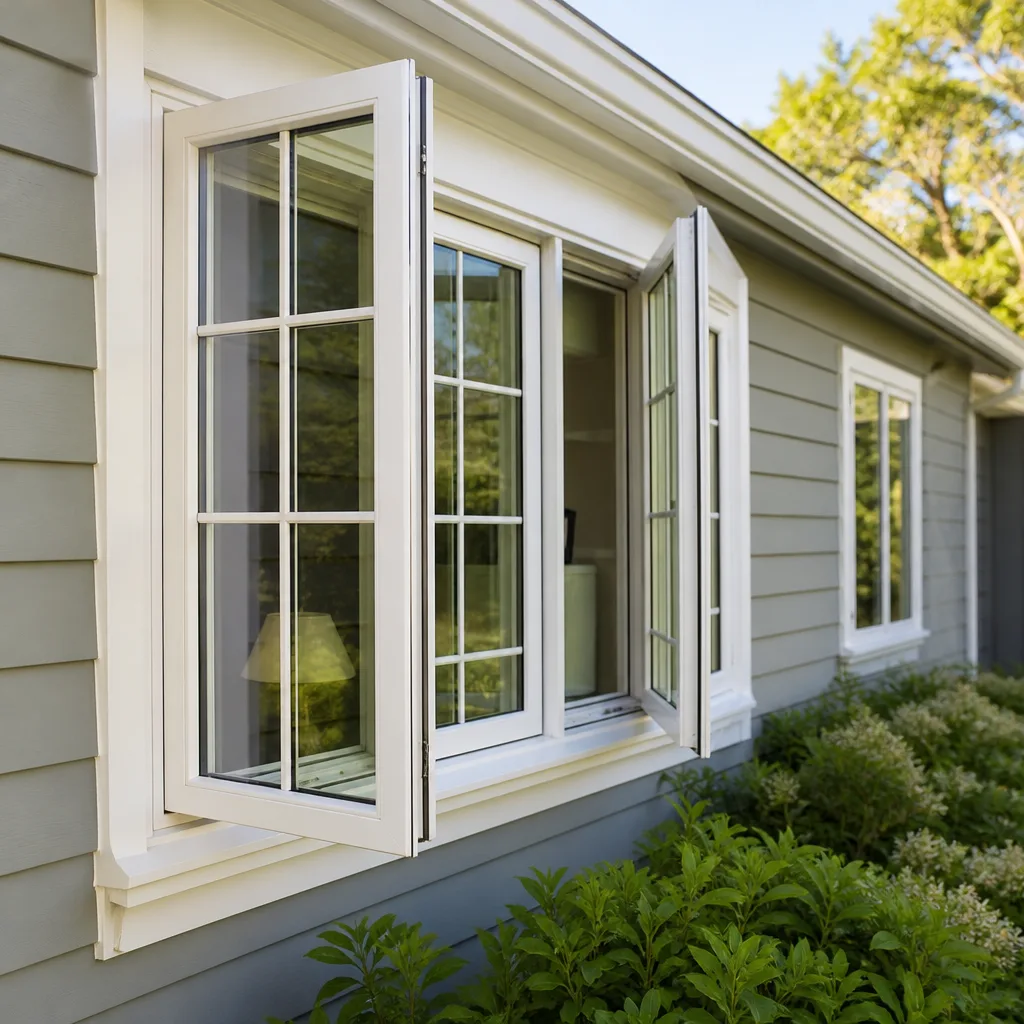 Casement
 Bay & bow
 Entry doors
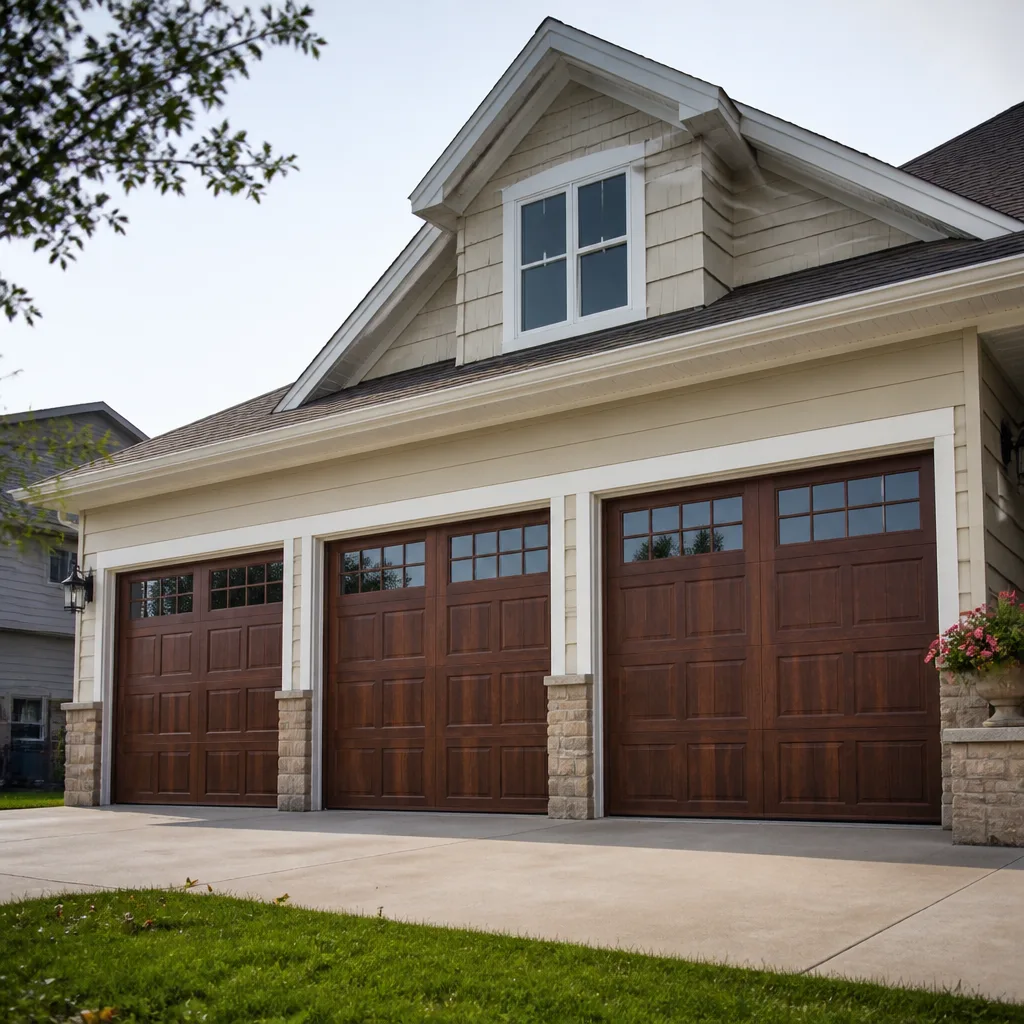 Impact garage doors
 PGT
 CGI
Free in-home measure and quote - PGT, CGI and CWS impact lines compared on your actual openings, style by style
Get your free estimateWindows & Doors Warning Signs: An Elk Grove Homeowner’s Reference Guide
A window that’s “just a little hard to open” in Elk Grove is rarely a hardware problem. More often it’s a sign the frame has shifted in the rough opening, and by the time the sash genuinely sticks, the flashing behind the stucco may already be compromised. That’s the trouble with most warning-sign lists: they describe the obvious late-stage failures and skip the quiet early signals that actually predict them. This reference is built the other way around. We organize the signs by product type and failure mode so you can self-diagnose before you call anyone, and understand what each signal usually means for a stucco-clad home in Elk Grove.
Quick Answer
The earliest reliable signs that windows or doors in Elk Grove need replacement are perimeter stucco cracking at the frame corners, condensation appearing between panes, a utility bill climbing without a usage change, and doors that no longer latch on the first try. Any one of these is worth investigating; two or more together usually point to a unit that has moved past adjustment and into replacement territory.
Styles & brands we work with
- Single hung
- Double hung
- Horizontal roller
- Casement
- Bay & bow
- Sliding glass doors
- Entry doors
- Impact garage doors
- PGT
- CGI
Table of Contents
- Frame-Movement Signals in Stucco Construction
- IGU Failure: The Four Visual Stages
- Reading Your Utility Bill for Air Infiltration
- Door-Specific Warning Signs
- Noise Change as a Diagnostic Tool
- Reading Stucco Cracks: Structural vs. Thermal
- A Numbered Self-Check You Can Run This Week
- Common Mistakes to Avoid
Frame-Movement Signals in Stucco Construction
Stucco changes the diagnostic picture. A wood-sided house flexes with its framing and shows movement as gaps you can see. Stucco is rigid, so when the framing or the rough opening shifts, the stucco has nowhere to go and it cracks. Those cracks are your first read on frame movement, and they tend to appear in predictable places.
The signals worth watching in an Elk Grove home:
- Hairline cracks radiating from frame corners. A single diagonal hairline at one corner of one window is common and usually cosmetic.
- Matching cracks at opposite corners. When the same window cracks diagonally at two opposing corners, that pattern often tracks with a frame that’s racked rather than sitting square.
- Cracks that follow the full perimeter. A crack tracing the whole frame outline suggests the window and the wall are moving independently.
- Stucco separation at the head. A visible gap or a cracking line along the top of the frame is a stronger signal than a corner crack, because it points to vertical movement.
- Interior drywall cracks at the same corner. If the crack shows inside and outside at the same location, the frame, not the finish, is the likely source.
Each of these gets more meaningful with time. A crack that appeared once and hasn’t widened in a year reads differently from one you can fit a credit card into. Photograph it with a coin held beside it for scale, date the photo, and compare in six months. Width change is the tell.
One caveat: not every crack means the window has failed. Stucco cracks for many reasons unrelated to the openings. What makes a crack diagnostic is its location relative to the frame and whether it’s changing. If you’re unsure, a free estimate is a reasonable way to get a second opinion without committing to anything, and our window installation work starts with reading exactly this kind of evidence before we recommend a product.
IGU Failure: The Four Visual Stages
An insulated glass unit, or IGU, is the sealed sandwich of two panes with a spacer and desiccant between them. When the perimeter seal fails, moisture gets in, and the failure follows a fairly consistent progression. Knowing the stage matters because it tells you how far the unit has gone and what action makes sense.
- Stage one: faint cloudiness at the edge. A slight haze or a thin milky band along the bottom or one edge of the glass, visible at an angle in certain light. Many homeowners read this as dirt on the inside and never mention it. This is the earliest point at which the seal has begun to admit moisture.
- Stage two: visible streaking or a film that won’t clean. The haze spreads inward and develops a pattern. Cleaning the glass does nothing because the film is between the panes. This stage is when the desiccant is still trying to absorb moisture but is losing ground.
- Stage three: condensation between panes. Water droplets or fog appear inside the unit, most obvious on cool mornings. This is the unambiguous seal failure stage.
- Stage four: standing moisture, staining, or permanent etching. Water pools at the bottom of the unit, the spacer degrades, and the glass itself can etch or stain permanently. At this point the visual defect is fixed and cleaning or polishing won’t help.
Insurance and warranty questions tend to surface around stages two and three. Seal failure is a manufacturing defect question, and how a manufacturer responds depends on the product, its documentation, and when the defect first appeared. Keep your original paperwork for the units in your home, note the date you first observed the haze, and photograph it. Those records matter more than anything you can describe over the phone later.
In Elk Grove, the long dry season means some seal failures go unnoticed until the first damp stretch, when interior condensation suddenly makes stage three obvious. That seasonal reveal is worth remembering: the failure didn’t just start, it became visible.
Reading Your Utility Bill for Air Infiltration
A draft test tells you a window feels leaky. A utility bill trend can tell you whether it actually is, and how much. That’s a different and more useful question, because plenty of windows feel drafty without costing meaningful energy. Here’s how to isolate windows and doors as the cause.
- Pull twelve months of bills for the same account. You’re looking for the same seasonal months year over year, not month to month. Compare this January’s usage against last January’s, not against October.
- Normalize for weather. Heating and cooling degree days are published by utilities and show up on many bills. If the weather was meaningfully colder or hotter, expect usage to move without any change to your house.
- Subtract the non-window changes. A new appliance, a change in occupancy, a new thermostat schedule, or added insulation all move the number. Write down everything that changed between the two periods.
- Look at the shape of the curve. Window infiltration shows up as a steeper slope in the extreme months. The gap between a mild month and an extreme month widens, because infiltration scales with the temperature difference across the wall.
- Check for a step change. A sudden jump starting in one billing period, with no appliance or occupancy change, is worth tracing room by room.
Older single-pane or early dual-pane units are the usual suspects, but the culprit is often the frame and the seal around it more than the glass. Our window replacement estimates always start with where the air is actually coming from, because swapping glass without addressing a compromised rough opening doesn’t fix the bill.
If the trend confirms losses at the windows, energy-efficient product lines from ECO Window Systems and ES Windows are worth comparing on their numbers. Thermal performance figures differ by configuration, so ask for the specific values on the units you’re considering rather than the family name.
Door-Specific Warning Signs
Doors fail differently from windows, and the signals vary by material. Sill condition in particular tells you a lot about which door type you’re looking at.
Fiberglass vs. wood sill indicators
A fiberglass door’s slab won’t rot, but the sill and the frame still can, and moisture problems there show up as swelling, softness at the sill corners, or a white bloom at the base. With a wood door or a wood frame, look for darkening, a soft spot you can press with a screwdriver handle, or paint that’s cracked in a line along the bottom rail. Fresh paint can hide rot for a season, so check for softness rather than appearance.
Hinge-side separation signals
The hinge side is where the door hangs, so any movement in the frame shows here first. Watch for a visible gap that widens toward the top or bottom of the hinge line, screws that turn without biting, small cracks in the jamb where the hinges are mortised, and a top corner where the door meets the frame unevenly. A widening gap on the hinge side is one of the strongest early indicators that the frame has moved.
The deadbolt misalignment
A deadbolt that needs a lift, a push, or a wiggle to engage is often described as a hardware problem. In most cases, it’s frame movement that’s moved the strike plate out of registration with the bolt. Check whether the door also drags at the top or rubs at the bottom on the strike side. Alignment drift on more than one point means the opening has moved, and adjusting the strike plate only treats the symptom.
Entry door replacement and sliding door replacement are both whole-opening jobs when frame movement is involved, which is why we treat them as their own scope. Products like Therma-Tru entry systems and sliding units from our portfolio are matched to the opening, not forced into a frame that’s already out of square.
Noise Change as a Diagnostic Tool
Sound is a diagnostic most homeowners never think to use, and it’s surprisingly useful. A window that has suddenly become noticeably louder is telling you something specific, and what it’s telling you depends on whether the change came on gradually or overnight.
- Suddenly louder on the same day as a wind shift or a street change. Probably not a window issue.
- Louder over a season, with no change outside. Often a frame seal issue. The unit is no longer coupled tightly to the wall, so sound that used to be blocked by a continuous seal now enters around the perimeter.
- Louder only when a particular vehicle or sound source passes. Can point to a specific failed seal or a gap at one edge, and worth walking the perimeter to find it.
- A new hollow or rattling quality to the sound. Suggests the glass unit itself has lost integrity or the sash no longer sits tight against the frame.
- Quieter after a change of seasons. Sometimes the observation, not the window, changed. Run the test again on the same kind of day.
For a sharper read, note the octave character of the noise. Low frequencies bleed through frames; higher frequencies come through gaps. If a window has gotten worse mostly on low frequencies, that points toward the glass unit and its coupling. If it’s worse across the board, the frame seal is the first suspect. In our experience, this is one of the most reliable at-home diagnostics you can run without tools, and it costs nothing but attention.
Reading Stucco Cracks: Structural vs. Thermal
Not every crack around a window means replacement. Stucco in a hot, dry climate like Elk Grove cycles constantly: it expands in the long warm season, contracts in the cooler months, and the finish coat moves a little with every swing. Thermal cracks are usually fine, and structural cracks follow a different pattern.
Here’s how to sort them:
- Thermal cracks are typically very fine, appear at the corners of a frame in a single diagonal, and stay stable over time. They may look a little worse after a hot stretch and less visible later. They don’t widen.
- Structural cracks are wider, often longer, and they change. They may connect two openings, run along the head of a frame, or show a matching pattern inside the house. Physical evidence like a slight offset between one side of the crack and the other is meaningful.
- Delamination at the frame perimeter, where the stucco has pulled cleanly away from the wall, is a structural signal, not a thermal one, because the thermal cycle doesn’t usually produce a clean separation line.
A good rule of thumb: thermal cracks are a finish concern, structural cracks are an opening concern. When they overlap, that’s when a professional look is worth the call, and the best starting point is a free estimate so you’re not paying for a diagnosis. Our door replacement work often begins with the same stucco read, because doors in a stucco wall tell the same story about the opening behind them.
A Numbered Self-Check You Can Run This Week
You don’t need to climb around a window frame to get a decent read on its condition, and no one should be up a ladder inspecting heights. What you can do safely, at floor level, is this:
- Photograph every opening on all four sides of the house. Date the photos and hold a coin against any crack for scale. This is your baseline.
- Open and close each operable window once, slowly. Note any point where it catches, and whether that’s in the same spot every time.
- Sight each window at an angle in daylight. Angle matters more than light because it reveals the thin haze that stage-one seal failure produces.
- Check every door’s deadbolt and latch on the first try. Note any that needed a nudge.
- Look at window and door sills for swelling, softness, or a white bloom.
- Compare this season’s utility usage with the same season last year. Write down any other household changes in the same note.
- Note anything that’s louder than it used to be and when you first noticed it.
- Repeat the whole list in three months and compare. A change over time is the strongest evidence you’ll have.
Run it on a Sunday, which is one of the six days we’re open from 7am to 7pm if you want to talk through what you found. We’re closed on Saturday. That said, the check above is designed to be done without anyone else involved, and the notes are more useful than any single observation.
Common Mistakes to Avoid
- Treating a stuck window as a hardware problem. If it’s catching at the same point every time, the frame has probably moved in the rough opening, and a new lock or a trim adjustment won’t fix it. Focus on why the opening shifted.
- Touching a window’s exterior sealant or flashing without knowing what’s underneath. This is genuinely a moisture-management detail, and a poor seal is worse than no touch at all. That work belongs with a professional.
- Judging double-pane glass by its interior appearance. A film you can’t clean from inside is between the panes and requires a full IGU replacement, not polish. Cleaning the outside won’t tell you the unit’s true condition.
- Grinding a deadbolt’s strike plate to get the bolt to engage. Widening the metal hides frame movement and can leave the door less secure. In most cases it’s worth diagnosing the frame instead of masking the symptom.
- Replacing windows and doors as unrelated jobs. If the house is telling you about movement in one opening, it’s usually telling you about the same wall. Grouping the work lets one diagnosis inform the other, and it’s the only way a stucco patch and trim schedule line up.
- Comparing utility bills month-to-month instead of year-over-year. Elk Grove’s hot and dry season makes month-to-month comparisons meaningless for infiltration. Pull the same season from last year.
- Ignoring a crack because it’s “only cosmetic.” A crack that hasn’t changed in a year is cosmetic. A crack that’s grown tells you about the opening and should sit higher on the list than convenience.
See the difference
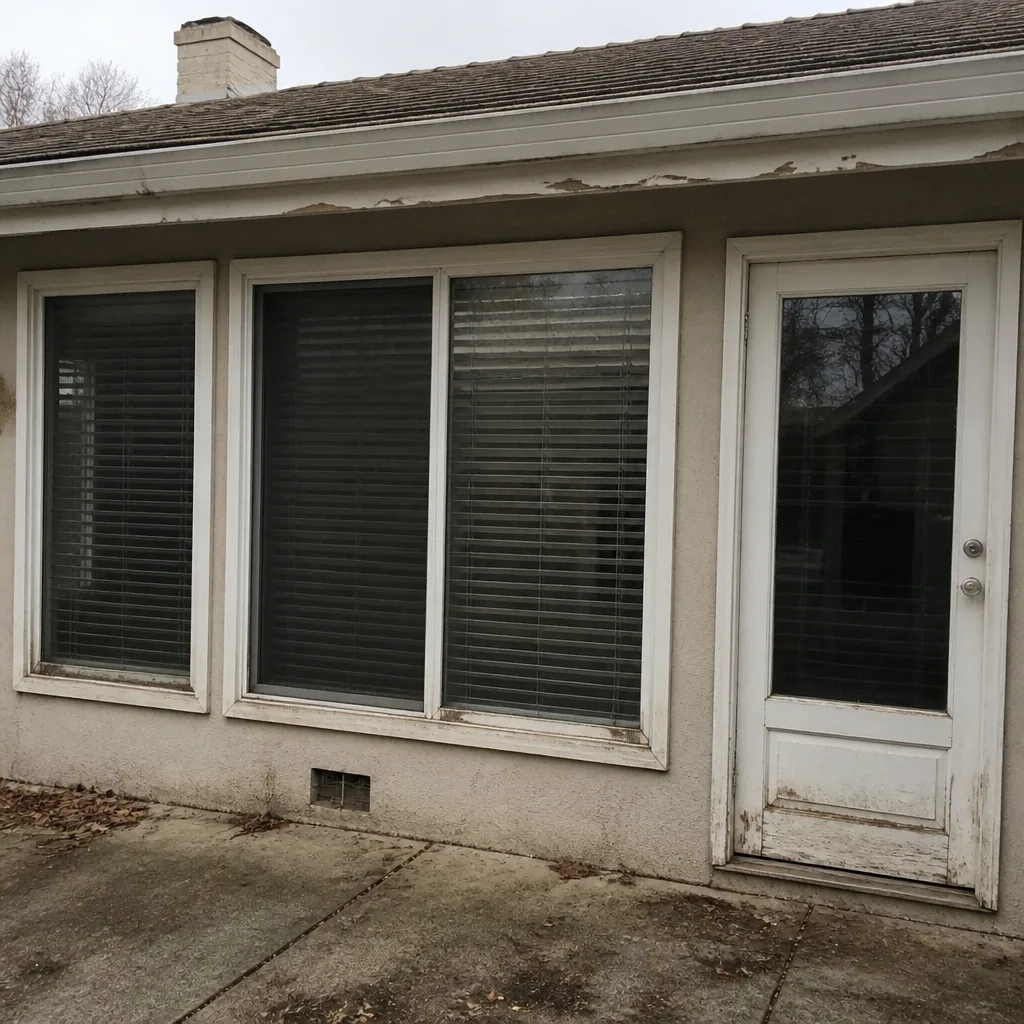 Before
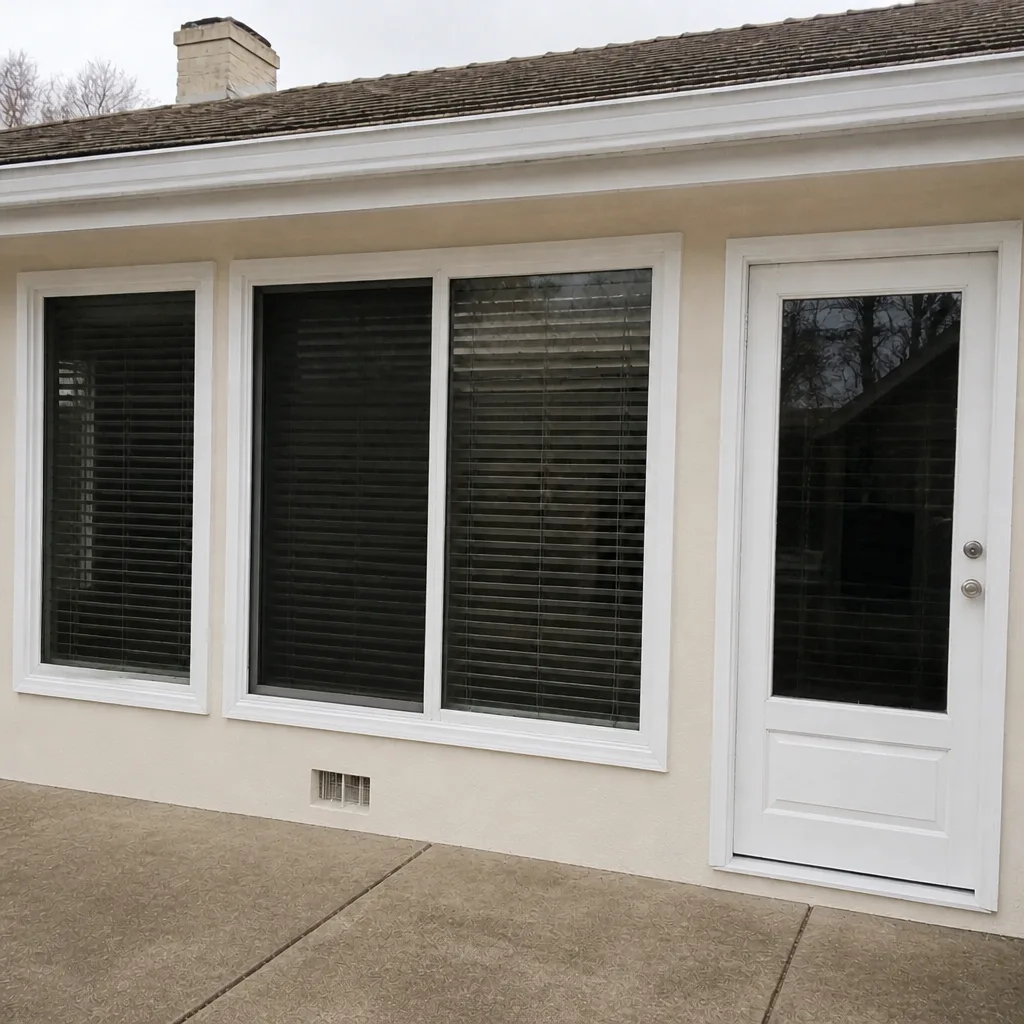 After
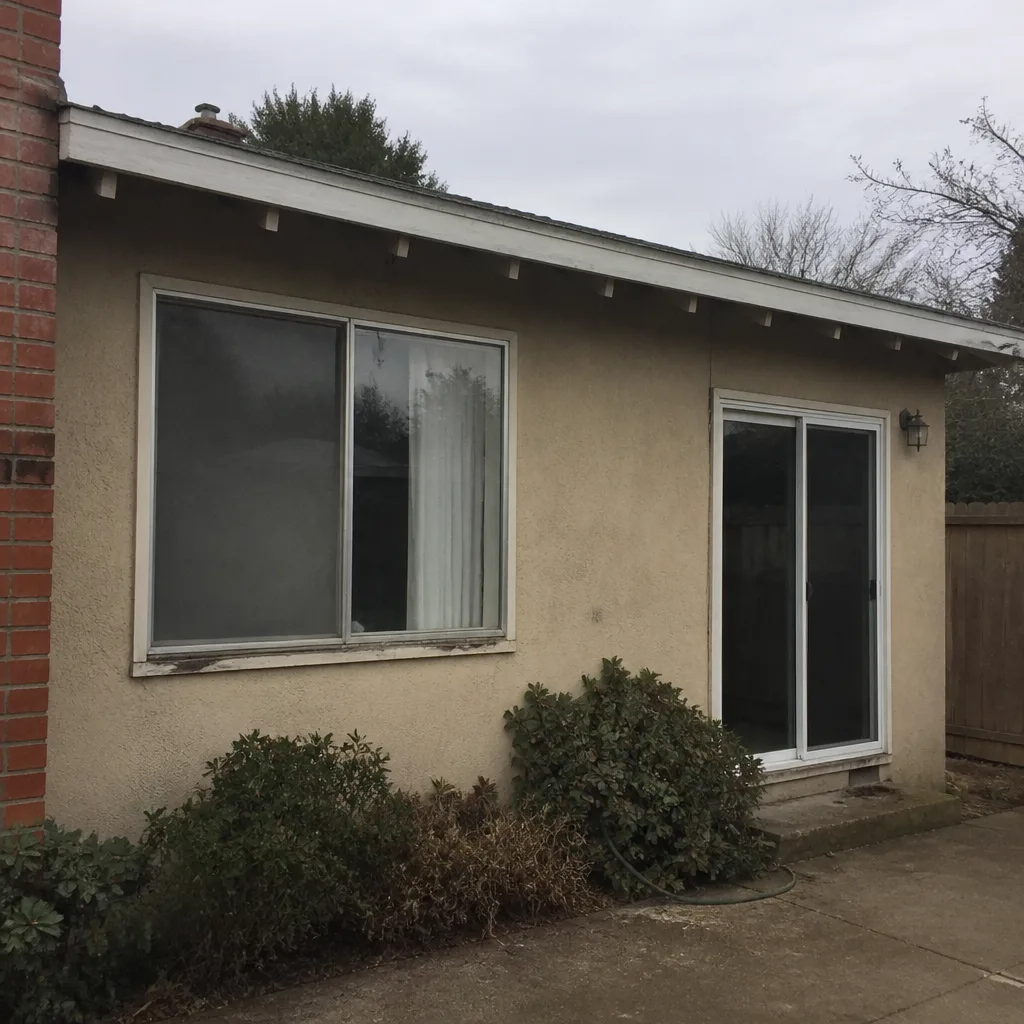 Before
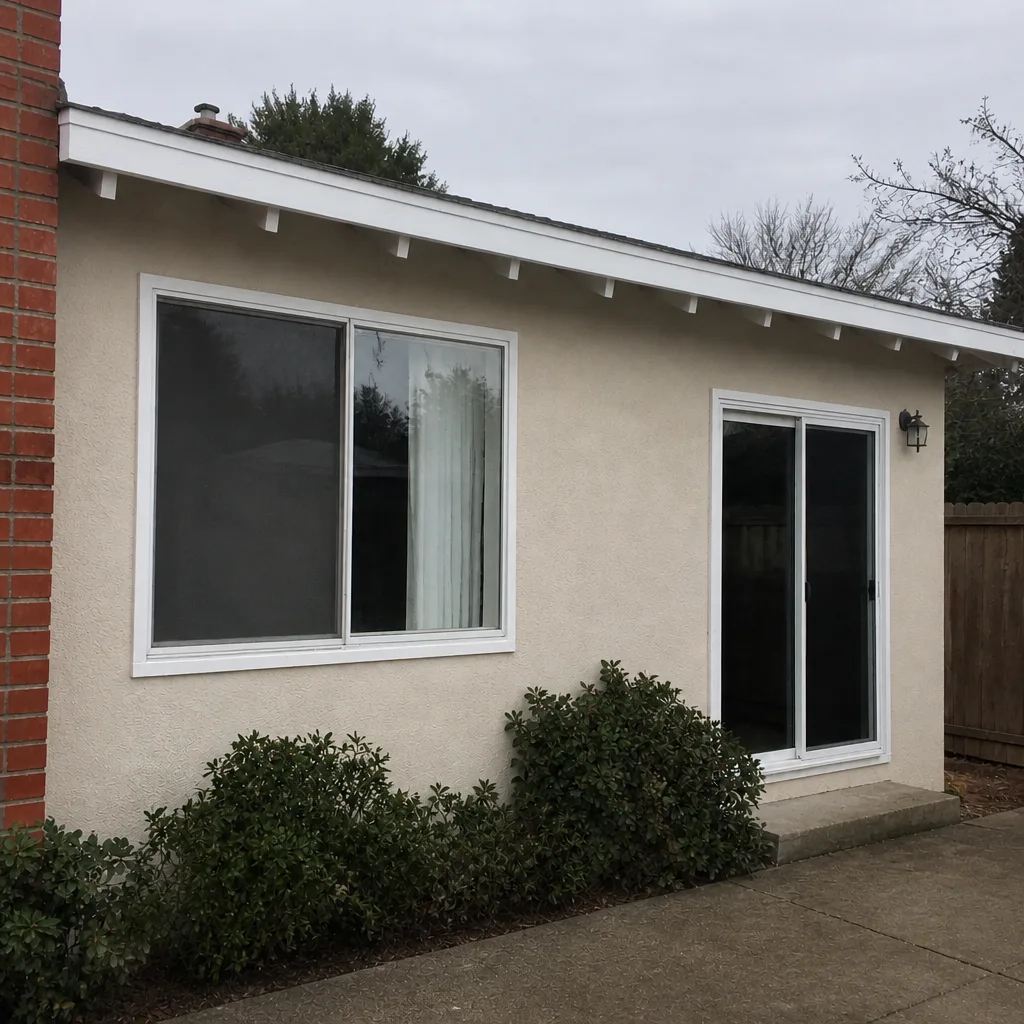 After
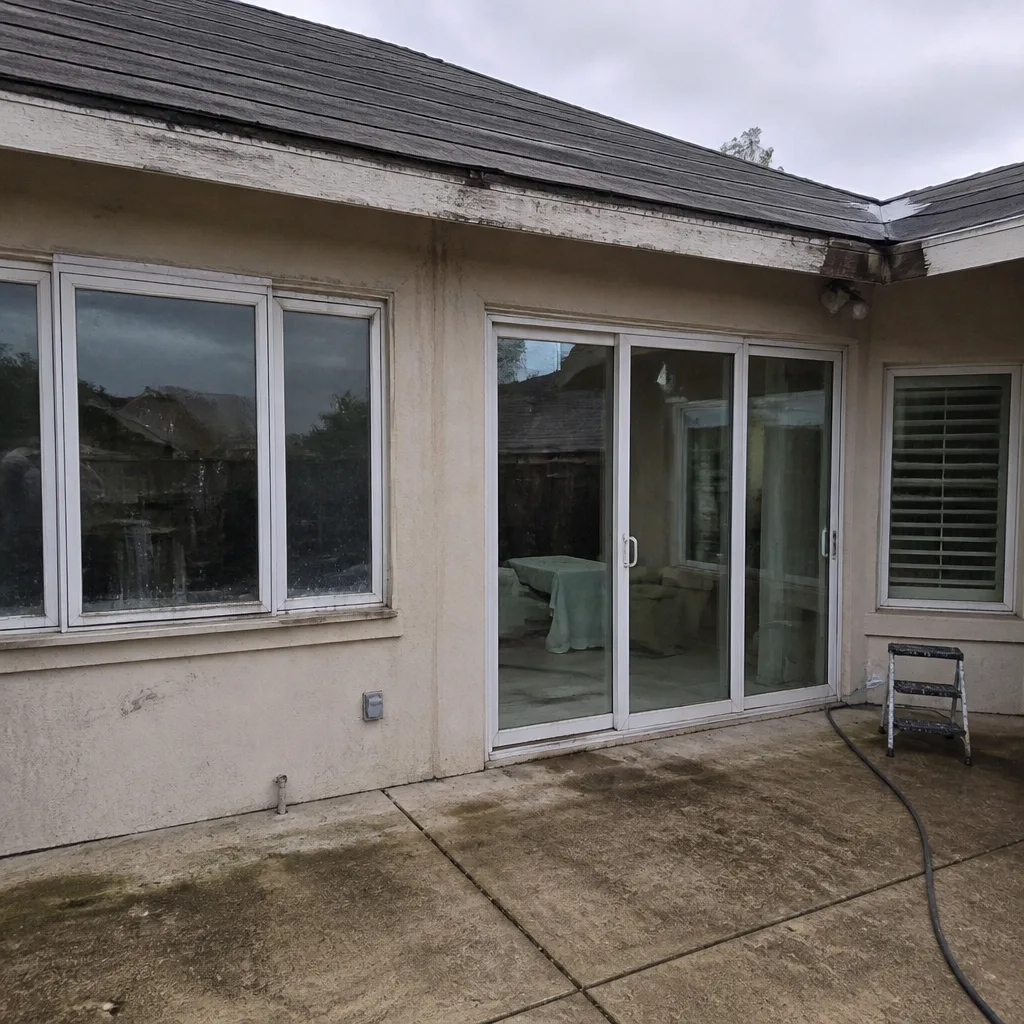 Before
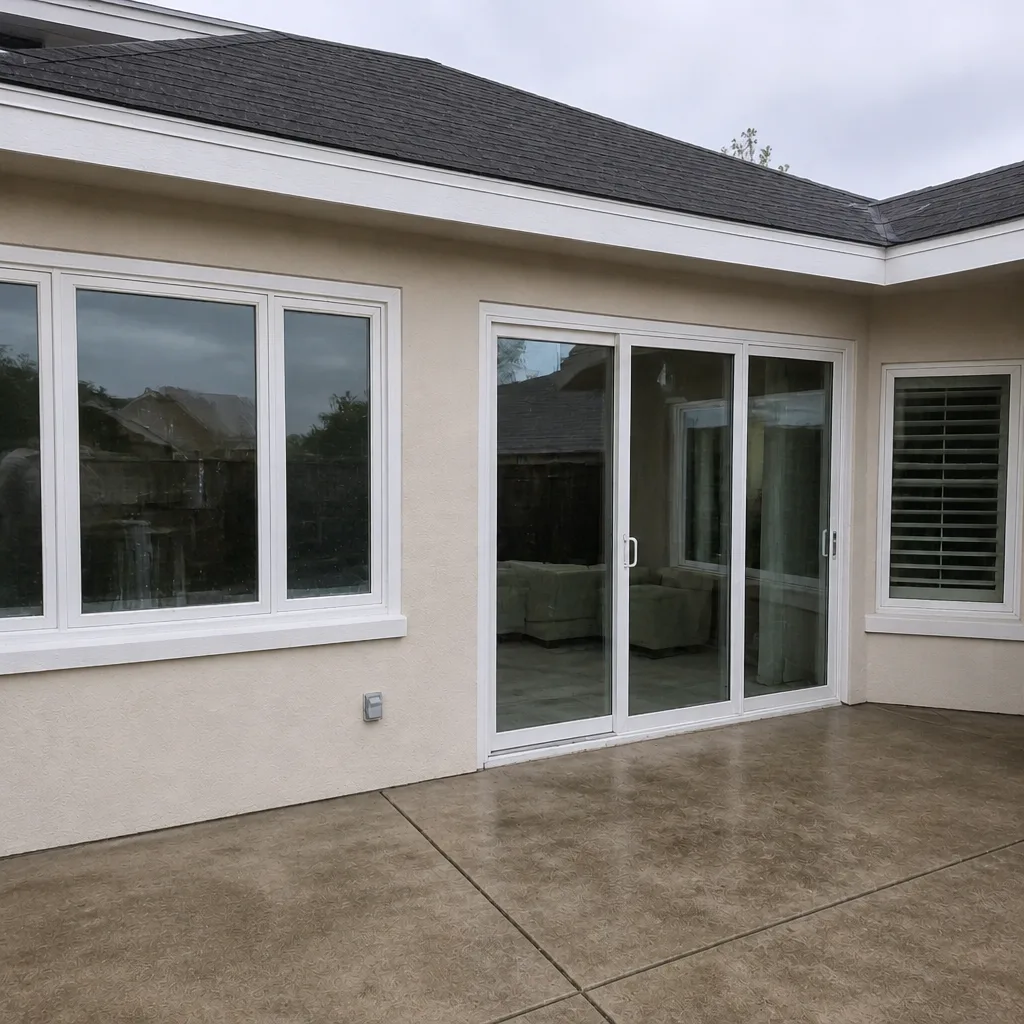 After
When to Call a Professional
Call when a signal is changing over time rather than holding steady. A crack that widens, a seal failure that moves from haze to water, a deadbolt that drifts on more than one point, or a utility trend that confirms infiltration after you’ve ruled out the other explanations. Also call when a window or door has moved to a point that affects security or weather-tightness, or when the door no longer latches without effort. Elk Grove Window Replacement offers free estimates in Elk Grove, and a free estimate is the lowest-cost way to get a specific read on your openings before deciding anything. You get a written, line-item estimate so the price you see is the price you can expect once work starts. Call (279) 333-8498.
Frequently Asked Questions
If it sticks at the same point every time, cracks are forming at the frame perimeter, or the glass shows condensation between panes, replacement territory is the likely answer; sticking that moves with the season and hasn’t produced any other signal often isn’t. Document the behavior over a few months, and call (279) 333-8498 for a free estimate if more than one signal is present.
It means the sealed unit’s perimeter seal has failed and moisture has entered the space between the panes. That’s stage three of the progression we described above, and it will not correct itself. For an exact quote on your windows, call (279) 333-8498 – estimates are free.
No. A single fine diagonal hairline at one corner that stays stable over a year is usually thermal movement in the stucco and cosmetic. Cracks that widen, run along the head, or appear at matching corners are the ones worth investigating, and we’re glad to look at photos over the phone before deciding whether an in-person estimate is worthwhile.
There’s no fixed timeline, because it depends on the failure mode. A seal that’s at stage one can sit for a while before moving to stage three, while frame movement and air infiltration are usually more predictable over seasons. The practical answer: compare your notes and photos in three months; if nothing has changed, you have time. If cracks are widening or water is appearing inside the unit, a free estimate is worth scheduling soon.
Yes, and this is one of the most common misreads. A draft can come from a cold surface rather than a gap, especially on a single-pane or older unit, and the window may be airtight. The utility bill trend, compared season to season, tells you which is which.
Yes, it matters. The inner seal (between the panes and the sealed cavity) and the outer seal (between the glass and the frame) fail differently: the inner seal is what produces condensation between the panes, while the outer seal produces air leakage and water entry around the edge. In Elk Grove, the outer seal tends to be the one we see compromised on older units, because the constant UV exposure here is hard on that perimeter material.
No, we’re closed on Saturday. We’re open Sunday through Friday, 7am to 7pm, and you can call (279) 333-8498 during those hours to book a free estimate or talk through what you’ve observed.
Impact-rated options through CGI and PGT are worth considering if you’re prioritizing storm performance, and they’re available in our portfolio for homeowners who want that built in. Whether they’re the right fit depends on your priorities and the opening itself; we’ll walk through the options on your estimate rather than push a single brand.
The Bottom Line
The early signals in an Elk Grove home are easy to dismiss and worth taking seriously. Watch for perimeter stucco cracks that change, condensation between panes that starts as haze and moves toward water, a utility trend that confirms infiltration after you’ve ruled out the obvious, deadbolt drift that means a frame has moved, and any change in how a window sounds. Photograph, compare, and repeat in three months. Two or more signals together are a good reason to get a professional read. Elk Grove Window Replacement is a windows-and-doors specialist serving Elk Grove, and we approach every estimate with the same diagnostic patience we’re suggesting here. Since we focus solely on windows and doors, our technicians, who have up to 13 years of experience, are tuned to these specific failure patterns rather than treating glass as one item on a long list of trades.
If your self-check turns up a signal worth a second look, call (279) 333-8498 for a free estimate. We carry eight brands, including CGI, CWS, and ES Windows, so you get the right window for your home rather than the only brand anyone happens to stock. Every recommendation is grounded in the product, not a commission. For a broader view of our full scope, visit Elk Grove Window Replacement.
Written by the team at Elk Grove Window Replacement.